Felt Flower Tutorial: A Comprehensive Guide
Embark on a delightful crafting journey! Discover the enchanting world of felt flowers, learning to create stunning blooms with simple materials and techniques.
This guide provides step-by-step instructions, from basic petal shaping to advanced detailing, empowering you to design unique floral arrangements for any occasion.
Explore diverse projects – hair accessories, brooches, or home décor – and unlock your creativity with this comprehensive felt flower tutorial!
Felt flowers offer a captivating avenue for creative expression, blending simplicity with endless possibilities. Unlike fresh blooms that wilt, these handcrafted treasures retain their beauty indefinitely, making them perfect for lasting decorations, charming gifts, or delightful personal accessories. This tutorial will guide you through the process of transforming flat sheets of felt into vibrant, three-dimensional floral masterpieces.
The appeal of felt lies in its versatility and ease of use. It doesn’t fray easily, requiring minimal seam finishing, and is available in a stunning array of colors. Whether you’re a seasoned crafter or a complete beginner, felt flowers provide an accessible entry point into the world of flower making. From delicate roses to cheerful daisies, the options are truly limitless.
Prepare to unlock your inner florist! We’ll explore fundamental techniques, empowering you to design and construct a variety of felt flower styles, adding a touch of handmade charm to your life and the lives of others.
Why Choose Felt for Flower Making?
Felt distinguishes itself as an exceptional material for crafting flowers due to its unique combination of properties. Unlike delicate fabrics like silk or chiffon, felt is remarkably forgiving and easy to manipulate, making it ideal for beginners. Its inherent stiffness allows petals to hold their shape beautifully, creating realistic and dimensional blooms without extensive wiring or support.
Furthermore, felt is incredibly affordable and widely accessible. A small investment in felt sheets unlocks a world of floral creativity, far surpassing the cost of purchasing pre-made flowers. It also boasts a delightful texture and vibrant color retention, ensuring your creations remain stunning for years to come.
Consider its practicality: felt flowers require no watering, won’t trigger allergies, and are remarkably durable. Choosing felt means choosing longevity, affordability, and creative freedom – a perfect blend for any flower-making endeavor!
Essential Tools and Materials
To begin your felt flower journey, gathering the right tools is key! You’ll need sharp scissors – fabric scissors are best – for precise petal cutting. A cutting mat protects your work surface, and a rotary cutter can speed up straight-line cuts. Glue is essential; both hot glue and fabric glue have their merits (more on that later!).
Of course, felt is the star! Consider various colors and thicknesses depending on your desired flower style. Embroidery floss adds beautiful detail, and a needle is needed for hand-stitching. Beads, buttons, or decorative stamens provide charming centerpieces.
Optional, but helpful, tools include a pencil or fabric marker for tracing patterns, tweezers for delicate placement, and wire for stems and support. With these materials in hand, you’re ready to blossom into a felt flower artist!
Types of Felt for Flower Crafts
Navigating the world of felt can be surprisingly diverse! Wool felt, made from natural sheep’s wool, is a premium choice – it’s soft, durable, and holds its shape beautifully. However, it’s generally more expensive. Acrylic felt is a budget-friendly alternative, widely available in a rainbow of colors, but it can pill over time.
Blended felt, combining wool and acrylic, offers a balance of cost and quality. Botanical felt, often 100% rayon, is known for its lovely drape and vibrant colors, making it ideal for delicate petals. Consider the felt’s thickness too – thinner felt is great for layering, while thicker felt provides more structure.
For beginners, acrylic or blended felt is a good starting point. As you gain experience, explore the luxurious feel and lasting quality of wool felt!
Scissors and Cutting Techniques
Sharp scissors are your best friend in felt flower making! Invest in a good pair specifically for fabric – dull scissors will crush the felt fibers, resulting in ragged edges. Small, pointed scissors are ideal for intricate petal shapes and detailed cuts, while larger scissors are efficient for cutting larger pieces.
Always cut felt one layer at a time for precision. When cutting petals, try to use long, smooth strokes rather than choppy snips. Rotate the felt as you cut, rather than twisting the scissors. For symmetrical petals, fold the felt in half or quarters before cutting.
Consider using rotary cutters and a cutting mat for straight lines and multiple layers. Practice makes perfect – experiment with different techniques to find what works best for you!
Glue Options: Hot Glue vs. Fabric Glue
Choosing the right adhesive is crucial for durable felt flowers. Both hot glue and fabric glue have their pros and cons. Hot glue offers a quick, strong bond, perfect for assembling flowers rapidly. However, it can sometimes be visible and create a stiffer finish, potentially damaging delicate felt. Use a low-temperature glue gun to minimize risk.
Fabric glue provides a more flexible and subtle bond, ideal for layering petals and creating a softer look. It’s less likely to damage the felt, but requires longer drying time. Consider a glue that dries clear to avoid unsightly residue.
For intricate details or attaching small embellishments, a precision applicator tip is invaluable. Always test the glue on a scrap piece of felt first!

Basic Felt Flower Techniques
Master fundamental skills! Learn essential techniques like cutting precise petals, shaping them realistically, and securely assembling your felt flower creations with ease.
Creating Felt Circles and Petals
Begin with the foundation: crafting perfect felt circles and petals is crucial for any felt flower project. For circles, utilize a compass or trace around circular objects – lids, cups, or cookie cutters – onto your chosen felt. Precision is key for a polished final look!
Petal creation offers more variety. You can freehand cut petals, using scissors to create organic shapes, or employ templates for uniformity; Consider the flower type you’re aiming for; rounded petals suit roses, while pointed ones are ideal for daisies.
Cutting multiple layers simultaneously – stacking several felt sheets – can expedite the process, especially for larger flowers. Ensure your scissors are sharp to prevent fraying and achieve clean edges; Experiment with different sizes and shapes to add dimension and realism to your floral designs. Remember, practice makes perfect!
Cutting Techniques for Different Petal Shapes
Mastering petal shapes unlocks floral diversity! For rounded petals, like those found in roses, use a gentle, curving motion with your scissors, avoiding sharp angles. Slightly overlap your cuts for a softer edge. Pointed petals, common in daisies or sunflowers, require a more decisive snip, creating a distinct tip.
Wavy petals add a whimsical touch; achieve this by subtly undulating your scissors as you cut. Heart-shaped petals demand precision – sketch the shape first, then carefully follow the lines. Consider using pinking shears for a decorative, scalloped edge on any petal type.
Experiment with asymmetry! Imperfect petals often look more natural; Don’t be afraid to vary the size and shape of petals within the same flower for a more organic, realistic appearance. Sharp scissors are essential for clean cuts and preventing fraying.
Rolling and Shaping Petals
Transform flat felt into lifelike curves! Gently roll petals between your fingers to create a natural cupping effect. For a tighter curl, use a round tool like a pencil or skewer, wrapping the felt around it. Secure the shape with a tiny dab of fabric glue, allowing it to dry completely.
Varying the curl intensity adds depth and realism. Tightly rolled petals form the core of many flowers, while looser curls create outer layers. Shaping petals involves gently bending and manipulating the felt to mimic natural forms. Use your fingertips to create subtle veins or folds.
Steam can assist! A quick burst of steam from an iron (on a low setting) can help felt hold its shape. Be cautious not to overheat. Experiment with different techniques to achieve the desired petal form for your unique floral creations.
Simple Felt Rose Tutorial
Craft a charming felt rose! This easy tutorial guides you through cutting, assembling, and adding delicate leaves to create a beautiful, handmade rose blossom.
Perfect for beginners, this project offers a rewarding experience, resulting in a lovely addition to any craft or decoration.
Cutting the Rose Petals
Begin by preparing your felt sheets; a variety of pinks and reds will create a realistic rose. Cut your 8×12 inch sheet of felt into four equal 2×12 inch strips – these will form the foundation of your rose petals.
For a natural look, avoid perfectly symmetrical petals. Instead, gently curve your scissors while cutting each strip to create organic, slightly irregular shapes. Vary the size and shape of the petals within each strip; some should be wider, others narrower, and some with more pronounced curves.
Consider cutting different petal styles – rounded, pointed, or slightly ruffled – to add depth and dimension to your finished rose. Aim for approximately 8-10 petals per strip, depending on the desired fullness of your bloom. Remember, imperfections add character!
Precise cutting isn’t crucial, as the petals will be manipulated and shaped later. Focus on creating a collection of varied, organic forms that will contribute to the rose’s overall beauty.
Assembling the Rose Bud
Start with a single petal, tightly rolling it to form the central core of the rose bud. Secure the roll with a small dab of fabric glue or a carefully placed stitch. This initial roll establishes the rose’s center and provides a base for subsequent layers.
Gradually add more petals, wrapping them around the central core and slightly overlapping each one. As you add petals, gently curve and shape them to create a natural, blossoming effect. Vary the angle and position of each petal to avoid a uniform, artificial appearance.
Apply glue sparingly to prevent visible residue and maintain the felt’s soft texture. Continue adding petals, increasing the diameter of the bud with each layer. Maintain a firm but gentle grip to ensure the petals adhere securely.
Periodically pause to assess the bud’s shape, adjusting petals as needed to achieve a balanced and realistic form. The goal is to create a tightly closed bud that hints at the unfolding beauty within.
Adding Leaves and Stem
Cut leaf shapes from green felt, mirroring the natural form of rose leaves – typically oval with a pointed tip and slightly serrated edges. Consider varying the size and shape of the leaves for a more organic look. Attach the leaves to the base of the rose bud using fabric glue, positioning them to appear as though they are growing directly from the stem.
For the stem, you have several options: a length of floral wire wrapped in green felt, a pre-made floral stem, or even a tightly rolled and glued strip of felt. Securely attach the stem to the base of the rose, ensuring it is firmly connected and provides adequate support.
Wrap the base of the rose where it meets the stem with a small piece of felt to conceal the attachment point and create a seamless transition. This finishing touch enhances the overall aesthetic and provides a polished appearance.
Adjust the leaves and stem to achieve your desired arrangement, creating a balanced and visually appealing composition.
Layered Felt Flower Tutorial
Unleash your creativity! Construct magnificent blooms by layering felt petals of varying sizes, creating depth and dimension for a truly captivating floral design.
This technique allows for stunning color combinations and intricate flower forms, perfect for embellishing projects with handmade beauty.
Cutting Varying Sizes of Petals
Achieving a realistic and visually appealing layered felt flower hinges on skillfully cutting petals in a range of sizes. Begin by creating a template for your smallest petal – approximately 1 inch in length is a good starting point. Then, incrementally increase the size of subsequent templates, adding roughly ¼ to ½ inch to the length and width with each iteration.
For a balanced flower, aim for at least four or five different petal sizes. Trace these templates onto your felt using a fabric pencil or disappearing ink pen. Precision is key; carefully cut along the traced lines with sharp scissors. Consider slightly varying the petal shapes within each size category – some rounded, some pointed – to mimic the natural irregularities found in real flowers.
Don’t be afraid to experiment! Cutting more petals than you initially think you’ll need provides flexibility during assembly. Remember, the gradual transition in petal size is what creates the illusion of depth and fullness in your finished layered felt flower.
Arranging and Gluing the Layers
The art of assembling a layered felt flower lies in thoughtful arrangement and secure adhesion. Start with the largest petals, positioning them around a central point – this will form the base of your bloom. Slightly overlap the petals, creating a natural, organic look. Apply a small dot of glue (hot glue or fabric glue, depending on your preference) to the base of each petal and gently press it into place.
Continue adding layers, gradually decreasing the petal size with each round. Offset the petals in each layer, ensuring that the seams between petals in adjacent layers aren’t directly aligned. This creates a fuller, more dynamic flower head.
Maintain a gentle pressure while the glue sets to prevent petals from lifting. As you progress towards the center, use smaller petals and more glue to build up texture and dimension.
Adding a Centerpiece (Beads, Buttons, etc.)
Elevate your felt flower with a captivating centerpiece! This final touch adds personality and completes the bloom’s aesthetic. Beads, buttons, embroidery floss, or even small felt circles work wonderfully; Consider the flower’s style – a rustic bloom pairs well with wooden beads, while a delicate flower benefits from shimmering sequins.
Apply a generous amount of glue to the center of the flower, ensuring a strong bond. Carefully position your chosen centerpiece, pressing it firmly into the glue. For beads or buttons, consider layering different sizes for added dimension.
Experiment with color and texture! A contrasting centerpiece can create a striking focal point, while a complementary color enhances the flower’s overall harmony. Allow the glue to dry completely before handling your finished felt flower.
Advanced Felt Flower Techniques
Refine your skills with intricate details! Explore realistic petal veins, wire support for stems, and textured embroidery to elevate your felt flower artistry.
Master these techniques to create truly lifelike and stunning floral creations, showcasing your dedication to the craft.
Creating Realistic Petal Veins
Achieving a natural look in your felt flowers hinges on replicating the delicate details found in real petals – namely, the veins. This isn’t about perfect anatomical accuracy, but rather suggesting the structure to add depth and realism.
Several methods can be employed. One popular technique involves using a fine-tipped fabric marker or embroidery floss in a slightly darker shade than your petal felt. Gently draw lines radiating from the base of the petal towards the tip, mimicking the branching pattern of veins. Vary the thickness and intensity of the lines for a more organic appearance.
Another approach utilizes simple embroidery stitches. A running stitch or a French knot can create subtle raised veins. For a more pronounced effect, consider using a stem stitch, carefully following the desired vein paths. Remember to keep the stitches small and delicate to avoid overwhelming the petal.
Experiment with different tools and techniques to find what works best for you. Practice on scrap felt pieces before applying the technique to your finished petals. The goal is to enhance the realism of your flowers, making them appear more lifelike and captivating.
Using Wire for Stem and Support
For felt flowers requiring structure and poseability, incorporating wire is essential. Floral wire, available in various gauges, provides the necessary support for stems, leaves, and even shaping petals themselves.
To create a stem, simply cut a length of wire and wrap the base of your felt flower securely around it using floral tape. The tape not only secures the flower but also conceals the wire. For added realism, consider wrapping green felt strips around the wire before applying the tape.
Wire can also reinforce delicate petals. Carefully insert a short length of wire into the base of each petal before attaching it to the flower center. This prevents drooping and allows you to shape the petals more effectively.
Experiment with different wire gauges to achieve varying levels of stiffness. Remember to always exercise caution when working with wire, using wire cutters and pliers safely.
Adding Texture with Embroidery
Elevate your felt flowers with the subtle artistry of embroidery! Simple stitches can transform flat petals into remarkably realistic blooms, adding depth and visual interest.
Embroidery floss in coordinating colors allows you to create delicate vein patterns on petals. A simple running stitch or back stitch works beautifully for this purpose. Consider using slightly darker shades to define the veins and create a shadowed effect.
French knots add charming texture to the flower center, mimicking pollen or tiny seed heads. Experiment with different knot sizes and densities for varied looks.
Satin stitch can outline petal edges, providing a polished finish and enhancing their shape. Don’t be afraid to combine different embroidery techniques to achieve unique textural effects!
Embroidery truly brings felt flowers to life;
Felt Flower Project Ideas
Unleash your imagination! Craft delightful hair accessories, charming brooches, or stunning home décor like wreaths and garlands with your newly created felt flowers.
Personalize gifts or add a handmade touch to your wardrobe with these versatile and beautiful felt flower creations.
Felt Flower Hair Accessories
Transform your hairstyles with charming felt flower hair accessories! These delightful embellishments add a touch of whimsy and personality to any look, perfect for everyday wear or special occasions.
Create stunning hair clips by securely attaching felt flowers to bobby clips or alligator clips using strong fabric glue or hot glue. Experiment with different flower sizes, colors, and arrangements to match your style.
Design elegant headbands by gluing felt flowers onto plain headbands. Consider layering multiple flowers for a more dramatic effect or adding delicate leaves for a natural touch.
Craft beautiful hairpins by attaching small felt flowers to hairpin bases. These are ideal for adding a subtle floral accent to updos or braids.
Don’t be afraid to get creative! Combine felt flowers with beads, ribbons, or other embellishments to create truly unique and personalized hair accessories.
These handmade accessories make wonderful gifts for friends and family, showcasing your crafting skills and thoughtful touch.
Felt Flower Brooches and Pins
Elevate your outfits with handcrafted felt flower brooches and pins! These charming accessories offer a delightful way to add a pop of color and personality to jackets, sweaters, scarves, and bags.
Begin by creating your desired felt flower using the techniques learned in this tutorial. Once complete, carefully attach a brooch pin backing to the back of the flower using strong adhesive like fabric glue or hot glue.
Experiment with different flower styles and sizes to create a diverse collection of brooches; Consider layering multiple flowers or adding embellishments like beads, buttons, or embroidery for a unique touch.
For a more secure attachment, reinforce the pin backing with a small piece of felt glued over it. This will prevent the pin from pulling through the flower over time.
Felt flower brooches and pins also make thoughtful and personalized gifts for loved ones, showcasing your creativity and attention to detail.
These little floral accents are a fantastic way to express your individual style and add a touch of handmade charm to any ensemble!
Felt Flower Home Decor (Wreaths, Garlands)
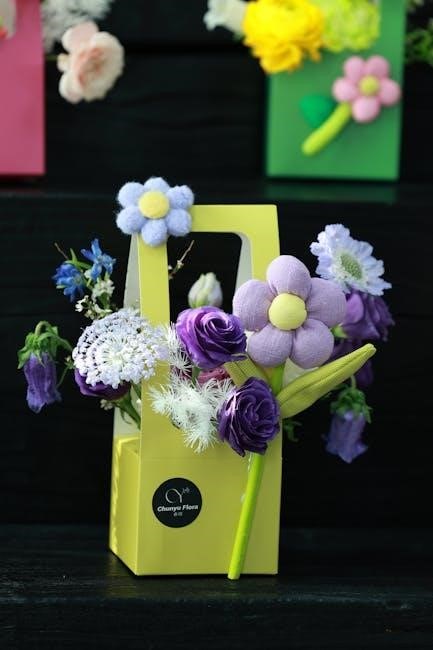
Transform your living space with the whimsical beauty of felt flower home décor! From charming wreaths to delightful garlands, felt flowers add a touch of handmade warmth and color to any room.
To create a felt flower wreath, begin with a wreath form (foam, wire, or grapevine). Attach your handcrafted felt flowers securely using hot glue, arranging them in a pleasing pattern. Add greenery or ribbons for extra flair.
For a felt flower garland, string together individual flowers using embroidery floss or twine. Vary the flower colors and sizes for a more dynamic look. Drape the garland across mantels, doorways, or shelves.
Consider seasonal themes when designing your décor. Create a spring wreath with pastel-colored flowers or a festive garland for the holidays.
Felt flower home décor is a wonderful way to personalize your home and showcase your crafting skills. It’s a delightful alternative to store-bought decorations!
Embrace the versatility of felt and let your imagination bloom, creating stunning floral displays that brighten up any space.
Caring for Your Felt Flowers
Preserve your floral creations! Gently dust felt flowers and store them in a cool, dry place, away from direct sunlight to prevent fading.
Repair loose petals with fabric glue, ensuring longevity and continued beauty of your handmade felt flower arrangements.
Cleaning and Storage Tips
Maintaining the pristine beauty of your felt flowers is surprisingly simple! Unlike fresh blooms, felt flowers require minimal upkeep, but a little care goes a long way in preserving their vibrant colors and delicate shapes.
For dusting, a soft brush or a can of compressed air works wonders, gently removing any accumulated dust particles without damaging the felt fibers. Avoid using water or harsh cleaning agents, as these can distort the shape or cause discoloration.
Proper storage is key to longevity; When not on display, store your felt flowers in a cool, dry place, shielded from direct sunlight. Consider using individual boxes or acid-free tissue paper to prevent crushing or fading. Avoid storing them in damp environments, as moisture can lead to mildew or warping.
For larger arrangements or wreaths, a garment bag can provide excellent protection during storage. Regularly inspect your felt flowers for any signs of wear and tear, addressing minor issues promptly to prevent further damage.
Preventing Fading and Damage
Protecting your handcrafted felt flowers from the elements is crucial for preserving their beauty over time. While felt is a relatively durable material, prolonged exposure to certain conditions can lead to fading, warping, or damage.
Direct sunlight is a major culprit in fading. Display your felt flowers away from windows or use UV-protective glass to minimize exposure. Similarly, avoid placing them near heat sources, as excessive heat can cause the felt to melt or distort.
Humidity can also be detrimental. Store your flowers in a dry environment and avoid displaying them in bathrooms or kitchens where moisture levels are high. Gentle handling is essential; avoid rough treatment or excessive bending, which can weaken the fibers.
Consider a fabric protector spray designed for delicate materials to add an extra layer of defense against dust and minor spills. Regular, preventative care will ensure your felt creations remain vibrant for years to come!
Repairing Damaged Petals
Even with careful handling, felt flowers may occasionally experience minor damage. Fortunately, most repairs are simple and can restore your creation to its former glory. For small tears or fraying edges, a tiny dab of fabric glue is often sufficient. Apply it sparingly and allow it to dry completely before handling.
If a petal becomes significantly misshapen, gently steam it with a garment steamer (avoid direct contact!). The steam can help to relax the fibers and allow you to reshape the petal. For detached petals, re-glue them securely, ensuring a strong bond.
If color fading occurs, consider using a fabric dye specifically designed for felt to revitalize the petal’s hue. Always test the dye on a hidden area first! With a little patience and these simple techniques, you can extend the life of your beloved felt flowers and enjoy their beauty for years to come.