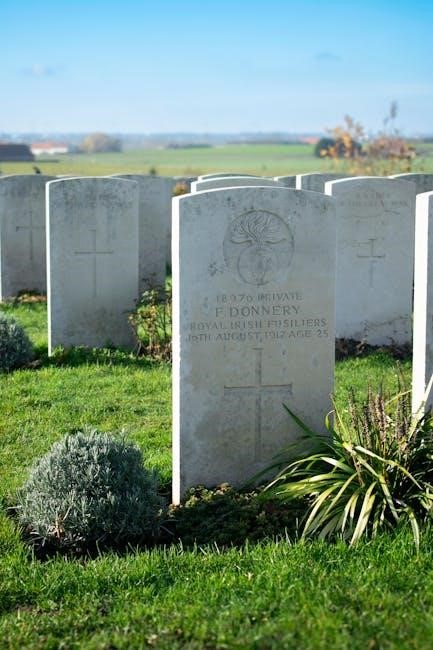
World War I, a pivotal moment in the 20th century, dramatically reshaped global politics and societies, leaving lasting effects on the world.
Understanding the causes, key events, and consequences of this conflict is crucial for comprehending modern history and international relations.
This devastating war, marked by unprecedented destruction and loss of life, serves as a stark reminder of the fragility of peace and the dangers of unchecked ambition.
Overview of the Conflict
World War I, often called the “Great War,” raged from 1914 to 1918, engulfing Europe and extending to involve nations across the globe. Initially a European conflict, it rapidly escalated due to intricate alliances and imperial ambitions. The war pitted the Central Powers – Germany, Austria-Hungary, the Ottoman Empire, and Bulgaria – against the Allied Powers, primarily comprised of Great Britain, France, Russia, Italy, and the United States.
The conflict was characterized by brutal trench warfare on the Western Front, resulting in immense casualties and a prolonged stalemate. Millions of soldiers faced horrific conditions, battling disease, starvation, and relentless artillery fire. Beyond the Western Front, fighting occurred across Eastern Europe, the Middle East, and Africa, demonstrating the war’s global reach.
Ultimately, the war concluded with the armistice of November 11, 1918, and the subsequent Treaty of Versailles. This treaty imposed harsh terms on Germany, contributing to future instability and laying the groundwork for subsequent conflicts. The war’s scale and devastation fundamentally altered the geopolitical landscape, marking a turning point in modern history.
Significance of Studying World War I
Studying World War I is paramount to understanding the 20th and 21st centuries, as it served as a crucial turning point in global history. The war’s devastating consequences – including the fall of empires, massive loss of life, and widespread economic disruption – fundamentally reshaped the international order.
Analyzing the causes of the war, such as militarism, alliances, imperialism, and nationalism, provides valuable insights into the dangers of unchecked aggression and the importance of diplomatic solutions. Examining the war’s impact on political thought, social structures, and technological advancements offers a deeper understanding of modern society.
Furthermore, comprehending the Treaty of Versailles and its repercussions is essential for grasping the origins of World War II and subsequent geopolitical tensions. By learning from the mistakes of the past, we can strive to prevent similar catastrophes and promote a more peaceful and stable future. The war remains a potent lesson in the complexities of international relations.
The Underlying Causes of World War I
World War I stemmed from complex, intertwined factors: rising militarism, a rigid alliance system, intense imperialism, and fervent nationalism, creating a volatile environment.
Militarism and the Arms Race
Militarism, the belief in maintaining a strong military capability and its readiness for war, was a prominent feature of early 20th-century Europe, significantly contributing to the outbreak of World War I.
Great Powers engaged in an intense arms race, particularly between Germany and Great Britain, fueled by mutual suspicion and a desire to maintain or gain a strategic advantage.
This competition led to a dramatic increase in military spending, the development of new and more destructive weapons, and the glorification of military power.
Germany’s rapid naval expansion, aimed at challenging British naval supremacy, was a key driver of this arms race, prompting Britain to modernize its fleet and forge closer ties with France.
The widespread belief that war was inevitable, coupled with detailed mobilization plans, created a climate where a relatively small incident could quickly escalate into a large-scale conflict.
Military leaders exerted increasing influence on political decision-making, advocating for aggressive policies and downplaying the potential consequences of war, further exacerbating tensions.
The System of Alliances
A complex network of alliances obligated nations to defend one another in case of attack, transforming a localized conflict into a widespread European war – World War I.
The two primary alliance blocs were the Triple Alliance, consisting of Germany, Austria-Hungary, and Italy (though Italy later remained neutral and joined the Allies), and the Triple Entente, comprising France, Russia, and Great Britain.
These alliances were initially intended to maintain a balance of power and deter aggression, but they ultimately had the opposite effect, escalating tensions and limiting diplomatic options.
Germany’s unconditional support for Austria-Hungary following the assassination of Archduke Franz Ferdinand, known as the “blank check,” emboldened Austria-Hungary to issue an ultimatum to Serbia.
Russia’s commitment to Serbia, based on Pan-Slavic ties and strategic interests, led to its mobilization, triggering Germany’s declaration of war on Russia and subsequently on France.
The rigid alliance system meant that once one nation was drawn into conflict, others were quickly pulled in, creating a domino effect that plunged Europe into war.
Imperialism and Colonial Rivalries
Imperialism, the competition for colonies and resources, significantly contributed to the tensions leading up to World War I, fostering rivalry and mistrust among European powers.
Great Britain and France possessed vast colonial empires, while Germany, a latecomer to the imperial game, sought to expand its own colonial holdings, leading to friction and disputes.
These colonial rivalries manifested in several crises, such as the Moroccan Crises of 1905 and 1911, where Germany challenged French influence in Morocco, bringing Europe to the brink of war;
Competition for economic dominance and access to raw materials fueled these imperial ambitions, creating a climate of hostility and suspicion.
The desire to control strategic territories and trade routes further intensified the rivalry, particularly in Africa and the Middle East.
This scramble for empire not only created tensions between the great powers but also contributed to a sense of national pride and a willingness to assert dominance on the world stage.
Nationalism and Pan-Slavism
Nationalism, an intense feeling of pride in and devotion to one’s nation, was a potent force in early 20th-century Europe, contributing significantly to the outbreak of World War I.
In the Austro-Hungarian Empire, various ethnic groups, including Serbs, Croats, and Bosnians, sought independence or unification with neighboring nations, fueled by nationalist aspirations.
Pan-Slavism, a movement to unite all Slavic peoples, particularly in the Balkans, further exacerbated tensions, with Russia positioning itself as the protector of Slavic interests.
Serbia’s ambition to create a “Greater Serbia” by uniting all South Slavs threatened the stability of Austria-Hungary, which feared the disintegration of its empire.
This fervent nationalism created a climate of hostility and mistrust, making compromise difficult and increasing the likelihood of conflict.
The assassination of Archduke Franz Ferdinand, a direct result of Serbian nationalism, served as the immediate trigger for the war, demonstrating the explosive power of these ideologies.
The Spark: Assassination and Initial Declarations
Archduke Franz Ferdinand’s assassination ignited a chain reaction; Austria-Hungary issued an ultimatum to Serbia, prompting Germany’s support and subsequent declarations of war.
The Assassination of Archduke Franz Ferdinand
On June 28, 1914, in Sarajevo, Bosnia, Archduke Franz Ferdinand, heir to the Austro-Hungarian throne, and his wife, Sophie, were assassinated by Gavrilo Princip, a member of the Black Hand, a Serbian nationalist organization.
This event served as the immediate catalyst for World War I. The Archduke was visiting Sarajevo to inspect imperial armed forces in Bosnia, which had been annexed by Austria-Hungary in 1908 – a move deeply resented by many Serbians who desired unification with Serbia.
Princip and his co-conspirators aimed to liberate Bosnia from Austro-Hungarian rule and unite it with Serbia. The assassination plot involved several individuals, and the initial attempt failed. However, due to a series of fateful coincidences, Princip found himself in a position to carry out the attack when the Archduke’s motorcade took a wrong turn.
The assassination sent shockwaves throughout Europe, escalating existing tensions and setting in motion a series of events that quickly spiraled into a full-scale war. Austria-Hungary, with the backing of Germany, saw this as an opportunity to crush Serbian nationalism and assert its dominance in the Balkans.
Austria-Hungary’s Ultimatum to Serbia
Following the assassination of Archduke Franz Ferdinand, Austria-Hungary, with assurances of support from Germany (the “blank check”), presented Serbia with a harsh ultimatum on July 23, 1914.
This ultimatum contained a series of demands intended to be deliberately unacceptable, effectively designed to provoke a war. Key demands included suppressing all anti-Austrian publications, dismissing officials implicated in the assassination plot, and allowing Austrian officials to participate in the investigation on Serbian soil.
Austria-Hungary aimed to humiliate Serbia and curtail its growing influence in the Balkans. The ultimatum was crafted to appear reasonable on the surface, but its underlying intent was to infringe upon Serbian sovereignty and justify military intervention.
Serbia, recognizing the severity of the situation, accepted most of the demands but refused to allow Austrian officials to conduct investigations within Serbia, viewing this as a violation of its national sovereignty. This partial acceptance was deemed insufficient by Austria-Hungary, who declared war on Serbia on July 28, 1914, initiating the chain reaction that led to World War I.
Germany’s Declaration of War
Germany’s declaration of war wasn’t a singular event, but a series of escalatory steps triggered by the pre-existing Schlieffen Plan – a strategy designed for a swift victory in a two-front war against France and Russia.
On August 1, 1914, Germany declared war on Russia, following Russia’s mobilization in support of Serbia. This decision was based on a miscalculation of Russia’s intentions and a belief that a quick victory was achievable.
Two days later, on August 3, Germany declared war on France, invoking the Schlieffen Plan which required a rapid invasion of France through neutral Belgium. This violation of Belgian neutrality proved a critical turning point, drawing Great Britain into the conflict.
Germany justified these declarations based on perceived threats to its security and a belief that its adversaries were intent on encircling and weakening the nation. These actions, fueled by militarism and a complex alliance system, irrevocably plunged Europe into a large-scale war, transforming a regional conflict into a global catastrophe.
Key Battles and Fronts of World War I
World War I encompassed multiple fronts, notably the Western Front’s brutal trench warfare, the Eastern Front’s vast expanse, and conflicts in Italy, the Middle East, and Africa.
The Western Front: Trench Warfare
The Western Front became synonymous with the horrors of World War I, characterized by a grueling system of trench warfare. Stretching across Belgium and France, this front saw opposing armies construct elaborate networks of trenches, separated by a dangerous “no man’s land.”
Life in the trenches was unimaginably harsh. Soldiers endured constant exposure to the elements, disease, and the ever-present threat of enemy fire. Attacks often involved massive artillery bombardments followed by infantry charges across no man’s land, resulting in staggering casualties for minimal territorial gain.
Key battles on the Western Front, such as the Battles of the Somme and Verdun, exemplify the brutal stalemate. These engagements resulted in millions of casualties and demonstrated the limitations of traditional military tactics against modern weaponry. The static nature of trench warfare led to a war of attrition, where the goal was to wear down the enemy through sustained losses.
New technologies, like machine guns, poison gas, and improved artillery, contributed to the defensive dominance of the trenches, making offensive maneuvers incredibly difficult and costly. The Western Front remained a bloody stalemate for most of the war, profoundly shaping the conflict’s overall character.
The Eastern Front: Russia’s Involvement
Russia’s participation on the Eastern Front in World War I was marked by initial mobilization efforts, followed by significant military setbacks and internal turmoil. Facing Germany and Austria-Hungary, the Russian army launched offensives in 1914 and 1916, but lacked sufficient industrial capacity and effective leadership to sustain them.
Early battles, like Tannenberg and the Masurian Lakes, resulted in devastating defeats for Russia, exposing weaknesses in its military organization and supply lines. Despite some successes, the Eastern Front became a drain on Russia’s resources, exacerbating existing social and economic problems.
The strain of war contributed to growing discontent within Russia, culminating in the February Revolution of 1917, which led to the abdication of the Tsar. The subsequent Provisional Government continued the war effort, but faced increasing opposition from the Bolsheviks.
Ultimately, the October Revolution in 1917 brought the Bolsheviks to power, and they negotiated the Treaty of Brest-Litovsk in 1918, withdrawing Russia from the war at a significant territorial cost. Russia’s involvement profoundly impacted the war’s trajectory and internal political landscape.
Other Fronts: Italy, the Middle East, and Africa
Beyond the Western and Eastern Fronts, World War I extended to Italy, the Middle East, and Africa, each presenting unique challenges and contributing to the war’s global scope. Italy initially remained neutral, joining the Allies in 1915 with promises of territorial gains, engaging in fierce battles against Austria-Hungary in the mountainous terrain.
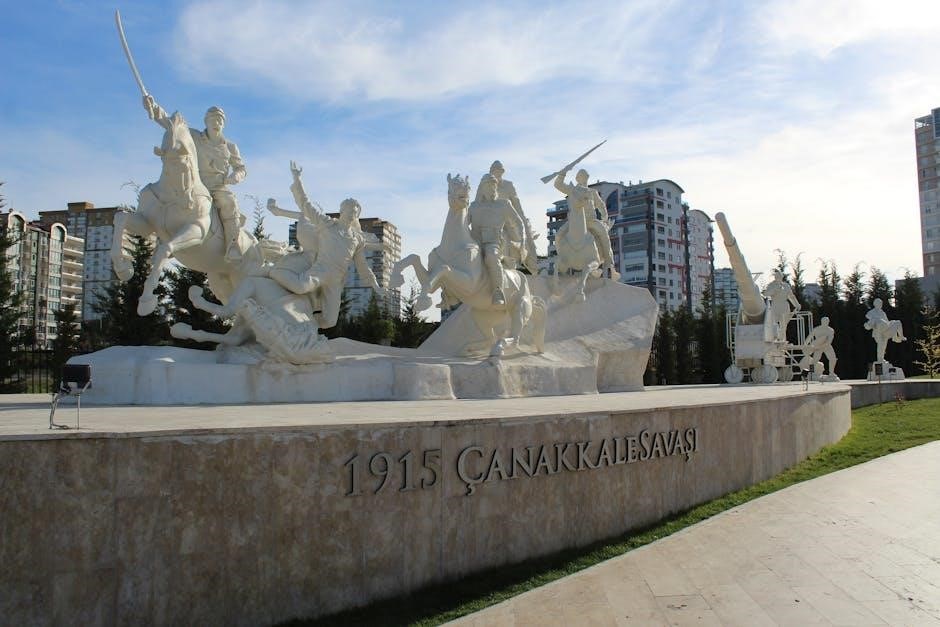
The Middle East became a theater of conflict as the Ottoman Empire, allied with the Central Powers, faced challenges from British and Arab forces. Campaigns like Gallipoli and the Arab Revolt, led by Lawrence of Arabia, aimed to weaken Ottoman control and secure vital resources.
Africa witnessed fighting primarily between German colonies and Allied forces, with battles in Togo, Cameroon, and German East Africa. These campaigns, though smaller in scale, diverted resources and manpower from other fronts.
These additional fronts demonstrated the truly global nature of the conflict, stretching military and logistical capabilities and impacting colonial populations significantly, shaping post-war geopolitical landscapes.

The Impact and Consequences of World War I
World War I brought immense political upheaval, including the fall of empires, and devastating economic consequences like widespread debt and destruction.
Socially, the war caused massive loss of life and fundamentally altered societal roles, leaving a lasting impact on the 20th century.
Political Consequences: Fall of Empires
World War I dramatically reshaped the political landscape of Europe and beyond, most notably through the collapse of four major imperial dynasties: the German, Russian, Austro-Hungarian, and Ottoman Empires.
The German Empire, under Kaiser Wilhelm II, was dismantled following its defeat, leading to the establishment of the Weimar Republic and a period of political instability.
In Russia, the immense strain of the war contributed significantly to the February and October Revolutions of 1917, resulting in the overthrow of the Tsarist autocracy and the rise of the Bolsheviks, establishing the Soviet Union.
The Austro-Hungarian Empire, a multi-ethnic state, disintegrated into several independent nations, including Austria, Hungary, Czechoslovakia, and Yugoslavia, reflecting the growing forces of nationalism.
Similarly, the Ottoman Empire, weakened by years of internal strife and military setbacks, dissolved, giving rise to modern Turkey and several Arab states in the Middle East.
These collapses created a power vacuum and redrew the map of Europe, setting the stage for future conflicts and political realignments in the interwar period.
Economic Consequences: Devastation and Debt
World War I inflicted unprecedented economic devastation upon Europe, leaving nations burdened with massive debts and struggling with widespread economic disruption. The financial costs of the war were astronomical, requiring governments to borrow heavily from both domestic and international lenders, particularly the United States.
Industrial production shifted dramatically to support the war effort, leading to shortages of consumer goods and inflation. Agricultural output declined as farmers were conscripted into the military, exacerbating food shortages and rising prices.
The physical destruction of infrastructure – factories, farms, transportation networks – in areas of intense fighting, particularly in France and Belgium, further hampered economic recovery.
Germany, saddled with enormous reparations payments imposed by the Treaty of Versailles, faced hyperinflation and economic instability in the early 1920s.
The war also disrupted international trade patterns, leading to economic isolationism and protectionist policies. The global economic order was fundamentally altered, with the United States emerging as a dominant economic power.
Social Consequences: Loss of Life and Changing Roles
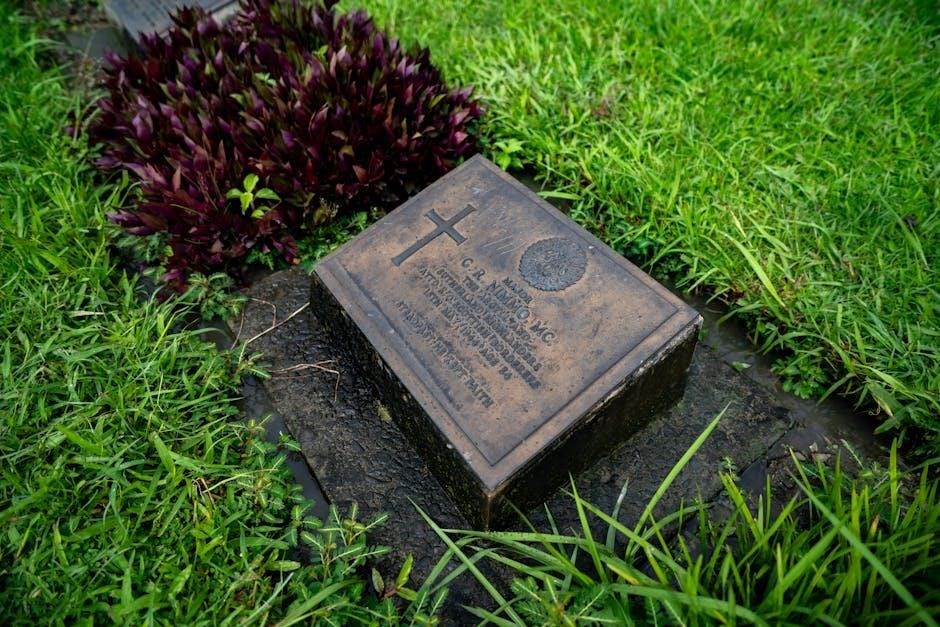
World War I resulted in a catastrophic loss of life, with an estimated 30 million military casualties and 8 million civilian deaths, profoundly impacting societies across Europe and beyond; Beyond the sheer numbers, the war left a generation scarred by trauma and grief, creating a “lost generation.”
The conflict dramatically altered social structures and gender roles. With millions of men mobilized for war, women entered the workforce in unprecedented numbers, taking on jobs previously held exclusively by men in factories, farms, and offices.
This shift challenged traditional gender norms and contributed to the growing women’s suffrage movement, leading to increased political rights for women in many countries.
The war also led to increased social mobility, as individuals from lower social classes rose through the ranks in the military and gained opportunities previously unavailable to them.
However, it also exacerbated existing social tensions and inequalities, contributing to post-war unrest and political instability.