Understanding Men’s Belt Sizes: A Comprehensive Guide
Navigating men’s belt sizing can be tricky, yet crucial for both comfort and style. This guide demystifies the process, offering insights into accurate measurements and conversions, ensuring a perfect fit every time.
What Determines Your Belt Size?
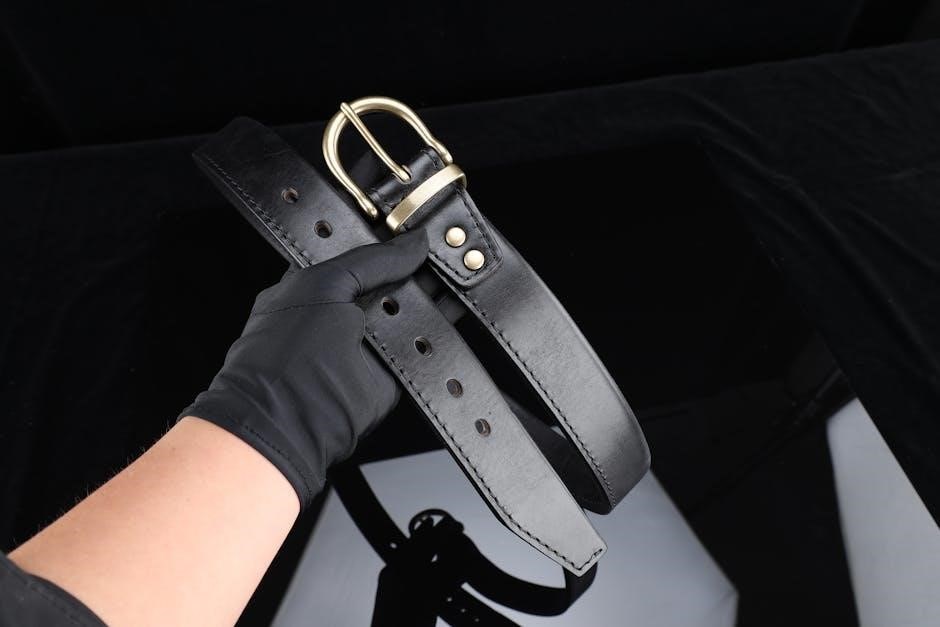
Determining your ideal belt size isn’t simply about your pant waist size; several factors contribute to the perfect fit. Primarily, it’s your actual waist measurement, taken directly around your natural waistline – typically just above your hip bones. However, how high or low you wear your trousers significantly impacts the required belt length.
Furthermore, the style of belt influences sizing. Wider belts often require a slightly larger size than narrower ones. The material also plays a role; leather belts, for instance, tend to stretch over time, while synthetic materials maintain their shape more consistently.
Understanding that belt sizes are often listed differently – in inches, centimeters, or numeric sizes – adds another layer of complexity. Brand variations are also crucial; sizing can differ noticeably between manufacturers. Therefore, relying solely on your pant size isn’t enough. Accurate measurement and consulting specific brand size charts are essential for avoiding common fitting issues and ensuring optimal comfort and style.
Waist Measurement vs. Belt Size
While closely related, your waist measurement and belt size are not identical. Your waist measurement is the circumference of your natural waistline, a foundational figure for determining the correct belt size. However, belt size typically refers to the length from the buckle prong to the middle hole of the belt, designed to comfortably fit your waist.
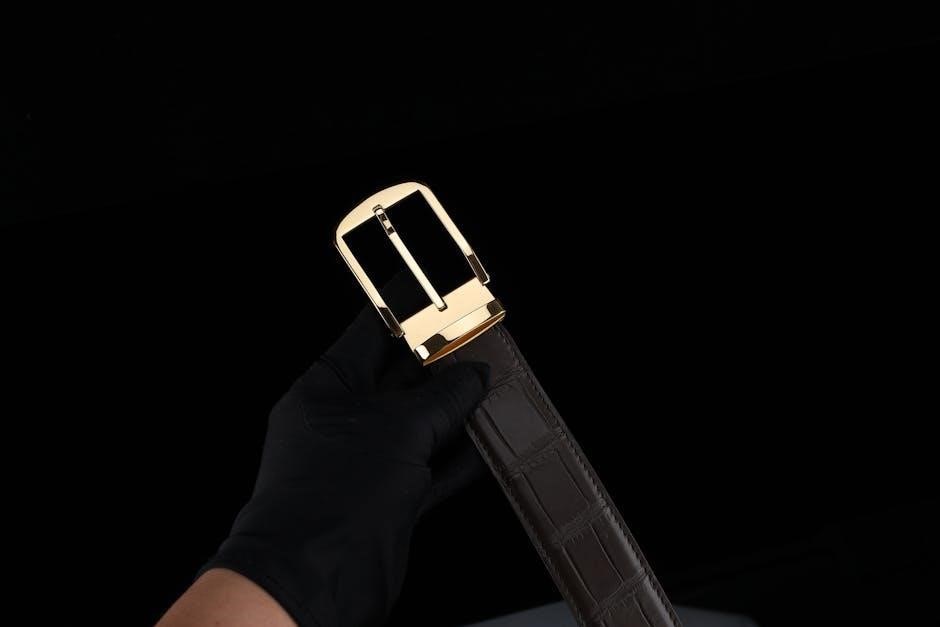
Generally, you’ll need to add approximately 2-4 inches to your waist measurement to find your corresponding belt size; This allowance ensures the belt can be fastened securely without being overly tight. For example, a 34-inch waist might require a 36-38 inch belt.
It’s crucial to remember this isn’t a rigid rule. Variations exist based on belt construction and brand preferences. Always prioritize checking a specific brand’s size chart, as their sizing conventions may differ. Ignoring this distinction can lead to a poorly fitting belt – either too loose or uncomfortably constricting.
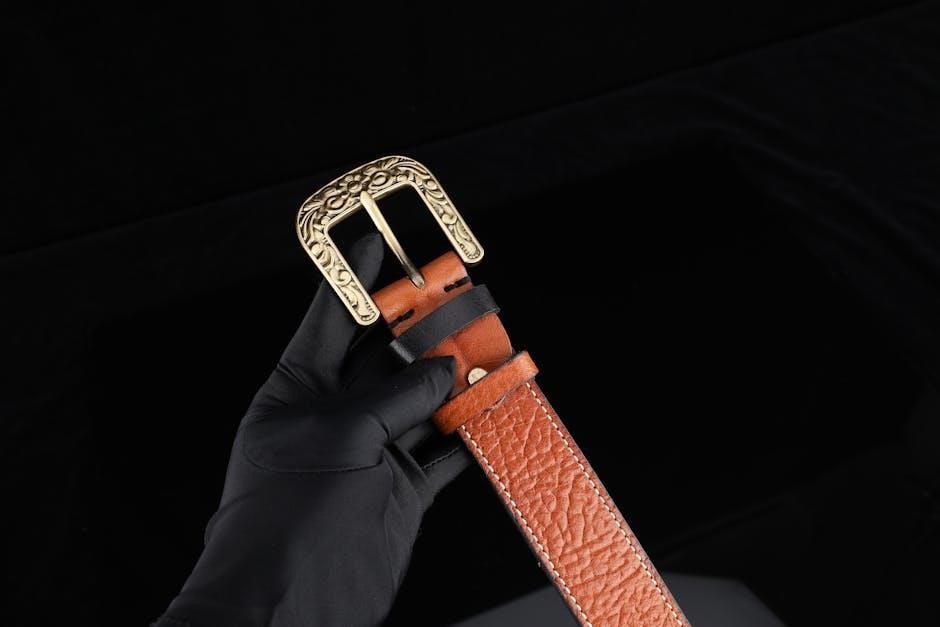
How to Accurately Measure Your Waist
Precise waist measurement is paramount for selecting the correct belt size. Begin by standing relaxed and breathing normally. Locate your natural waistline – typically the narrowest part of your torso, above your belly button and below your ribcage. Avoid measuring over clothing, as this adds unnecessary bulk and inaccuracy.
Use a flexible measuring tape, ensuring it’s snug but not tight. Wrap the tape around your natural waistline, keeping it parallel to the floor. Record the measurement in inches or centimeters. It’s helpful to have a friend assist for greater accuracy, especially if reaching around your back is difficult.
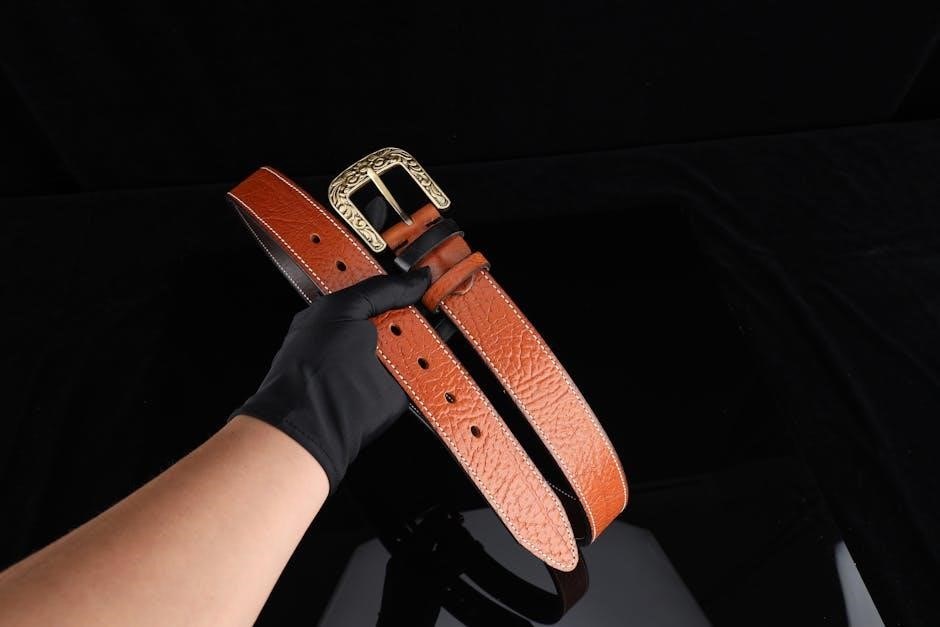
Repeat the measurement a couple of times to confirm consistency. If the readings differ, take the average. Remember, a slightly loose measurement is preferable to a too-tight one. This ensures comfort and allows for adjustments based on clothing layers. Accurate measurement is the cornerstone of a well-fitted belt.
Using a Men’s Belt Size Chart
Once you’ve accurately measured your waist, the next step is consulting a men’s belt size chart. These charts correlate waist measurements with corresponding belt sizes, simplifying the selection process. However, remember that sizing can vary significantly between brands, so always prioritize brand-specific charts when available.
Most charts present sizes in inches, while some also include centimeters for international customers. Locate your waist measurement on the chart and identify the recommended belt size. Be mindful of whether the chart refers to waist size or belt length – these are distinct measurements.
If your measurement falls between sizes, it’s generally advisable to size up for a more comfortable fit. Consider your personal preference; a slightly looser belt allows for greater flexibility, while a snugger fit offers more support. Utilizing a chart effectively ensures a better chance of finding a belt that fits perfectly and complements your style.
Standard Belt Size Chart (Inches & Centimeters)
Below is a general guideline for standard men’s belt sizes, expressed in both inches and centimeters. Please note these are approximate and can differ based on the manufacturer. Always refer to the specific brand’s chart for the most accurate sizing information.
Waist Size (Inches) | Belt Size (Inches) | Belt Size (Centimeters)
30-32 | 34 | 86-91
32-34 | 36 | 91-96
34-36 | 38 | 96-101
36-38 | 40 | 101-106
38-40 | 42 | 106-111
40-42 | 44 | 111-116
42-44 | 46 | 116-121
This chart assumes a standard belt length. For individuals with larger waist sizes, or those preferring a different fit, longer belt lengths are available. Remember to measure your actual waist, not your pant size, for the most precise results. Variations exist, so brand-specific charts remain the most reliable resource.
Belt Size Based on Pant Waist Size ⎯ US System
Determining your belt size based on your pant waist size is a common starting point, though not always precise. In the US system, a general rule of thumb is to add 2-4 inches to your pant waist measurement to find your corresponding belt size. This accounts for the overlap needed to secure the belt.
Pant Waist (Inches) | Recommended Belt Size (Inches)
30 | 32-34
32 | 34-36
34 | 36-38
36 | 38-40
38 | 40-42
40 | 42-44
42 | 44-46
However, this is merely a guideline. Factors like how high you wear your pants and personal preference can influence the ideal belt size. It’s always best to measure your actual waist for a more accurate fit. Remember that pant sizes can sometimes be inconsistent between brands, making waist measurement even more crucial. Prioritize accuracy over relying solely on your pant size.
Belt Size Based on Pant Waist Size ⎯ UK/EU System
For those accustomed to the UK or EU sizing systems, converting pant waist size to belt size requires a slightly different approach. Generally, add approximately 5-10cm (2-4 inches) to your pant waist measurement to determine the appropriate belt size. This allowance ensures a comfortable and secure fit, accommodating the belt’s overlap.
Pant Waist (UK/EU) | Recommended Belt Size (cm/Inches)
32 UK / 48 EU | 86-91cm / 34-36 inches
34 UK / 50 EU | 91-96cm / 36-38 inches
36 UK / 52 EU | 96-101cm / 38-40 inches
38 UK / 54 EU | 101-106cm / 40-42 inches
It’s important to note that, like the US system, these are estimations. Variations in pant sizing across brands exist, and personal preference plays a role. Always prioritize measuring your actual waist for the most accurate result. Utilizing a size chart specific to the brand you’re purchasing from is highly recommended for optimal fit and avoiding sizing discrepancies.
Understanding Numeric Belt Sizes
Beyond inch and centimeter measurements, belts are often labeled with numeric sizes, typically ranging from 75 to 110, or even higher. These numbers don’t directly correspond to waist size but represent the total length of the belt, measured from the buckle’s prong to the middle hole; This system can seem confusing, but understanding the correlation is key.
Generally, a numeric belt size of 80 equates to approximately a 32-inch waist, 85 to a 34-inch waist, 90 to a 36-inch waist, and so on, increasing by roughly 2 inches per numeric increment. However, this is a general guideline, and variations occur between manufacturers.
To accurately determine your numeric size, measure a well-fitting belt from the buckle prong to the hole you currently use. Alternatively, use a size chart provided by the specific brand. Remember that numeric sizing offers a convenient shorthand, but relying solely on it without cross-referencing with your waist measurement or a brand’s chart can lead to an ill-fitting belt.
Belt Length Measurement: Finding the Right Fit
Achieving the perfect belt fit hinges on accurately measuring belt length, not just relying on waist size. A properly sized belt should allow enough length to comfortably fasten around your waist with a few inches of excess strap remaining. This excess isn’t just for aesthetics; it’s crucial for buckle functionality and future adjustments.
To measure belt length, take a current, well-fitting belt and lay it flat. Measure from the buckle prong to the hole you typically use. This measurement, in inches or centimeters, represents your ideal belt length. Alternatively, if you don’t have a suitable belt to measure, measure your waist and add approximately 4-6 inches (10-15 cm) to determine the required belt length.
Consider that belt lengths are often specified by brands, and variations exist. Always prioritize the brand’s specific sizing guide when available. A belt that’s too short will be uncomfortable and may not fasten, while one that’s too long will appear sloppy and potentially unravel over time.
Belt Width Considerations
Beyond length, belt width significantly impacts both style and functionality. Traditionally, belt width correlates with the style of trousers worn. Wider belts, typically 1.5 inches (38mm) or greater, are best suited for jeans and casual pants, offering a bolder, more robust look. They complement the heavier fabric and more relaxed aesthetic of these garments.
For dress pants and more formal attire, a narrower belt – around 1 to 1.25 inches (25-32mm) – is generally preferred. This creates a more refined and proportional appearance, aligning with the sleek silhouette of dress trousers. Wider belts can appear disproportionate and detract from the overall polished look.
The buckle size should also be considered in relation to belt width. A larger buckle can balance a wider belt, while a smaller, more understated buckle complements a narrower strap. Ultimately, choosing the right width is a matter of personal preference and ensuring it harmonizes with your outfit and body type.
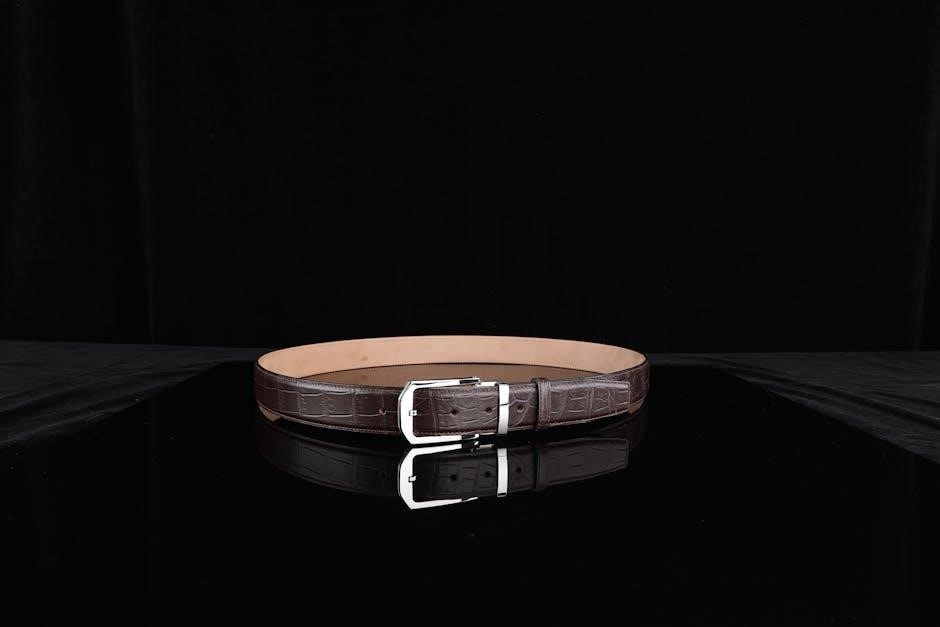
Variations in Belt Sizing Between Brands
It’s crucial to understand that belt sizing isn’t standardized across all manufacturers. While a size 34 belt might fit perfectly from one brand, it could feel snug or loose from another. This inconsistency stems from differing interpretations of waist measurements and variations in how belts are constructed.
Some brands may measure belts from the buckle’s base, while others measure from the center hole. Manufacturing tolerances also play a role, leading to slight discrepancies in actual belt length. European brands often utilize a different sizing system than American brands, requiring careful conversion;
Therefore, always consult the specific brand’s size chart whenever possible, rather than relying on generic charts. Checking customer reviews can also provide valuable insights into a brand’s sizing tendencies. When in doubt, it’s generally advisable to size up, as you can always add additional holes, but removing material is impossible.
Leather Belt Stretch and Break-In Period
Genuine leather belts, prized for their durability and style, undergo a natural stretch and break-in period. Initially, a new leather belt might feel slightly stiff and firm. With wear, the leather fibers will gradually conform to your waist’s shape, resulting in a more comfortable and personalized fit.
The amount of stretch varies depending on the leather’s quality and thickness. Full-grain leather tends to stretch more than top-grain leather. Expect a slight lengthening, typically around an inch or two, over the first few weeks of regular use. This is why a snug initial fit is preferable.
To expedite the break-in process, avoid over-tightening the belt initially. Wear it regularly for shorter periods, gradually increasing the wear time. Conditioning the leather can also help soften it and promote flexibility, extending the belt’s lifespan and enhancing its comfort.
Common Belt Sizing Mistakes to Avoid
Many men inadvertently make errors when determining their belt size, leading to discomfort or a poor fit. A frequent mistake is measuring pants size instead of the actual waist. Pant size isn’t always equivalent to waist measurement, especially with varying fits and styles.
Another common error is assuming belt size corresponds directly to pant waist size. Typically, a belt should be 2-4 inches larger than your pant waist size to account for overlap and proper buckling. Failing to consider this difference results in belts that are either too tight or too loose.
Ignoring brand-specific size charts is also problematic. Belt sizing can vary between manufacturers, so always consult the brand’s guide when possible. Finally, neglecting to account for leather stretch – particularly with new belts – can lead to an initially comfortable belt becoming too large over time. Accurate measurement and mindful consideration prevent these pitfalls.
Converting Existing Belt Size to a New Purchase
If you have a well-fitting belt, leveraging its measurements is a reliable way to determine your size for new purchases. Begin by measuring the total length of your current belt, from the buckle prong to the hole you typically use. This measurement closely approximates your ideal belt size.
However, remember that this length isn’t always a direct translation to standard belt sizes. Compare your measurement to a size chart, noting whether it falls between sizes. If so, it’s generally advisable to size up for a comfortable fit, allowing for adjustments.
Consider the belt’s material. Leather belts may have stretched over time, so factoring in a slight reduction from the measured length might be necessary. Also, be mindful of differing sizing systems – inches versus centimeters – and convert accordingly. Utilizing your existing belt as a reference streamlines the process and minimizes the risk of purchasing an ill-fitting replacement.
Belt Size for Different Body Types
While waist measurement is paramount, body type nuances can influence the ideal belt fit. Men with athletic builds often have a larger difference between their waist and hip measurements, potentially requiring a belt slightly larger than their pant size to sit comfortably.
Conversely, individuals with a more rectangular body shape may find that their waist and hip measurements are closer, allowing for a more accurate belt size match to their pant waist. Those with a prominent stomach might benefit from a wider belt to provide better support and prevent rolling.
Furthermore, consider how high you wear your pants. If you prefer a higher rise, you may need a slightly longer belt to accommodate the increased waist measurement at that point. Ultimately, prioritizing comfort and ensuring the belt sits securely without being overly tight is key, regardless of body type.
Finding Your Belt Size with Limited Information
Occasionally, you might need to estimate your belt size without access to a measuring tape or your pant waist size. If you know your pant size in inches, a general rule is to add 2-4 inches to determine your approximate belt size. This accounts for the overlap needed to secure the belt.
Alternatively, if you have an existing belt that fits well, measure its total length from the buckle prong to the hole you typically use. This measurement, often in inches, can serve as a good starting point for finding a replacement. Remember that belt sizes can vary between brands, so this is an estimation.
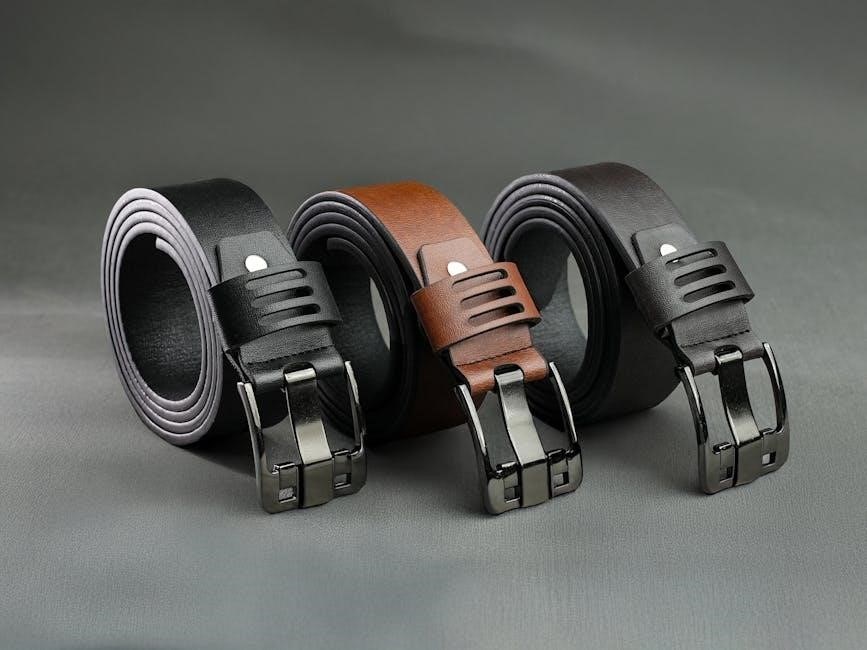
When in doubt, it’s generally better to err on the side of a slightly larger belt, as you can always add extra holes. Online retailers often provide detailed size charts and customer reviews that can offer additional guidance in these situations.
Online Belt Size Finders & Tools
Fortunately, numerous online resources simplify the belt-sizing process. Many retailers offer interactive belt size finders on their websites. These tools typically ask for your waist measurement or pant size and then recommend the corresponding belt size based on their specific brand’s sizing standards.
Several websites provide generic belt size charts that convert waist measurements into both inch and centimeter belt sizes. These charts can be helpful for getting a general idea of your size, but always prioritize brand-specific charts when available. Some tools even allow you to input the length of an existing belt to find a matching size.
Utilizing these online tools can save time and reduce the risk of ordering the wrong size. Remember to double-check the retailer’s return policy before making a purchase, just in case adjustments are needed. Accurate sizing ensures both comfort and a polished appearance.
Belt Size and Style: Matching the Right Belt to Your Outfit
Beyond simply finding the correct length, consider how belt style complements your ensemble. A formal outfit demands a sleek, narrower belt – typically around 1 to 1.25 inches wide – in classic colors like black or brown. Wider belts, often exceeding 1.5 inches, are better suited for casual wear, pairing well with jeans and chinos.
The buckle also plays a crucial role. For professional settings, opt for understated buckles in silver or gold. More relaxed looks can accommodate bolder buckles with unique designs. Leather belts remain a versatile choice, while fabric belts offer a more casual aesthetic.
Ensure the belt’s color harmonizes with your shoes. Brown belts generally pair best with brown shoes, while black belts complement black shoes. A well-chosen belt elevates your overall style, demonstrating attention to detail and a refined sense of fashion. Prioritize both fit and aesthetic cohesion.
Where to Find Reliable Belt Size Charts (Brand Specific)
While general belt size charts offer a starting point, brand-specific charts are invaluable for a precise fit. Many retailers and manufacturers provide detailed sizing guides directly on their websites. Look for dedicated “Size Guide” or “Fit Guide” sections, often linked near the product description.
Popular brands like Levi’s, Polo Ralph Lauren, and Tommy Hilfiger typically feature comprehensive charts converting waist measurements to belt sizes. Department stores such as Nordstrom and Macy’s also provide brand-specific sizing information. Don’t hesitate to consult customer service if a chart is unavailable or unclear.
Always prioritize the brand’s chart over generic guides, as sizing can vary significantly. Checking online reviews can also reveal if a particular brand tends to run large or small. Utilizing these resources minimizes the risk of incorrect purchases and ensures a comfortable, stylish fit. Accurate sizing is key to a confident look.