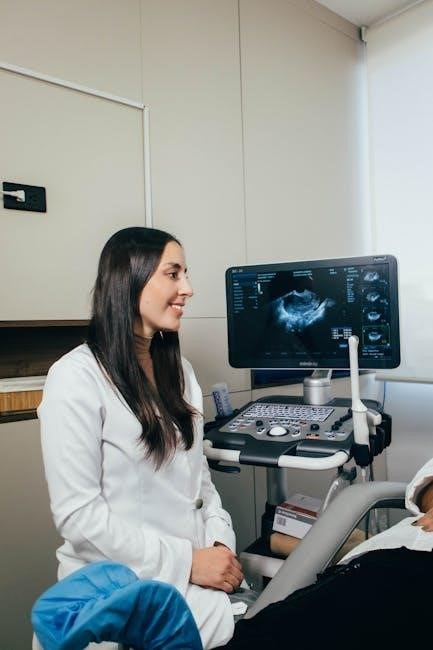
CPT codes 19083 & 19084 are central to billing for ultrasound-guided breast biopsies‚ alongside 76642‚ 77066 & 77062.
Accurate coding ensures appropriate reimbursement and reflects the procedure’s complexity.
Overview of the Procedure
Ultrasound-guided breast biopsy involves using real-time ultrasound imaging to visualize and access suspicious lesions within the breast tissue. A small incision is made‚ and a biopsy needle is inserted through the skin and into the lesion‚ guided by the ultrasound probe.
The procedure allows for precise targeting‚ minimizing damage to surrounding healthy tissue. Core needle biopsies are commonly performed‚ extracting small tissue samples for pathological examination. CPT codes 19083 and 19084 specifically address this technique‚ with 19083 for the first lesion and 19084 for each additional lesion biopsied during the same session.
Often‚ a micro clip is placed (included in 19083) to mark the biopsy site for future reference.
Importance of Accurate CPT Coding
Accurate CPT coding for ultrasound-guided breast biopsies – utilizing codes like 19083 and 19084 – is paramount for several reasons. Correct coding ensures appropriate reimbursement from payers‚ preventing claim denials and revenue loss for healthcare facilities.
Furthermore‚ precise coding reflects the complexity and skill involved in the procedure‚ accurately representing the services provided. It also supports data collection for tracking procedure volumes and costs.
Incorrect coding can lead to legal and compliance issues‚ including audits and penalties. Detailed documentation supporting the chosen codes is crucial for demonstrating medical necessity and justifying the billed services.
Primary CPT Codes for Ultrasound-Guided Breast Biopsy
CPT codes 19083 & 19084 define ultrasound-guided breast biopsies‚ including lesion localization and specimen imaging‚ forming the core of billing.
CPT Code 19083: First Lesion
CPT code 19083 represents the percutaneous ultrasound-guided biopsy of the first breast lesion. This includes the placement of a breast localization device‚ such as a micro-clip‚ if performed‚ and imaging of the obtained biopsy specimen.
Crucially‚ this code encompasses both the biopsy itself and the ultrasound guidance utilized during the procedure. Documentation must clearly support both aspects. It’s essential to remember that 19083 is only reported once per breast‚ even if multiple samples are taken from the initial lesion. Proper coding relies on detailed procedure notes confirming these elements.
CPT Code 19084: Each Additional Lesion
CPT code 19084 is used to report each additional breast lesion biopsied during the same session‚ following the initial lesion coded with 19083. Like 19083‚ this code includes ultrasound guidance‚ localization device placement (if applicable)‚ and specimen imaging.
It’s vital to accurately identify and separately report each distinct lesion. Documentation should clearly delineate each biopsy site and confirm the use of ultrasound guidance for each. 19084 is an add-on code and cannot be billed alone; it always requires 19083 to be reported first.
Imaging Guidance and Modality Considerations
Ultrasound (US) is frequently the primary guidance for breast biopsies (CPT 19083-19084)‚ but switching modalities requires thorough documentation.
Ultrasound as the Primary Guidance Modality
Ultrasound is a widely utilized and effective imaging technique for guiding percutaneous breast biopsies‚ specifically utilizing CPT codes 19083 and 19084. Its real-time imaging capabilities allow for precise needle placement‚ enhancing accuracy and minimizing the risk of complications. The accessibility and cost-effectiveness of ultrasound contribute to its frequent use as the initial guidance modality.
Furthermore‚ ultrasound is particularly beneficial for evaluating palpable masses and differentiating between cystic and solid lesions. When employed‚ detailed documentation within the radiology report is crucial‚ clearly outlining the lesion characteristics and the ultrasound guidance process during the biopsy procedure.
Switching Modalities: Documentation Requirements
When transitioning from ultrasound guidance (CPT 19083-19084) to alternative modalities like MRI (CPT 19085-19086) during a breast biopsy‚ comprehensive documentation is paramount. The radiology report must explicitly justify the modality switch‚ detailing limitations encountered with ultrasound – such as tissue density or lesion location – that necessitated the change.
Clear articulation of these clinical reasons is essential for proper coding and reimbursement. Documentation should also confirm that the initial attempt with ultrasound was reasonable and appropriate before proceeding to the alternative imaging technique.

Additional Procedures and Associated Codes
CPT 19083 includes breast localization device placement and specimen imaging; separate coding is needed for complex cases or additional devices.
Placement of Breast Localization Device
CPT code 19083 specifically encompasses the placement of breast localization devices‚ such as clips or metallic pellets‚ during the ultrasound-guided biopsy procedure. This is not a separately reportable service when performed concurrently with the biopsy itself.
However‚ if a localization device is placed at a separate session prior to the biopsy‚ or if multiple‚ complex placements are required‚ separate coding considerations may apply. Thorough documentation detailing the necessity and complexity of the device placement is crucial for accurate billing and avoiding claim denials.
Ensure the radiology report clearly supports the medical necessity of the localization device and its relationship to the biopsy procedure.
Imaging of the Biopsy Specimen
CPT code 19083 also includes imaging of the biopsy specimen obtained during the ultrasound-guided breast biopsy. This imaging verification confirms successful sample acquisition and proper placement within the specimen container.
This component is bundled within the code and doesn’t warrant separate reimbursement when performed as an integral part of the 19083 procedure. However‚ if additional‚ complex imaging is required beyond standard verification – such as specialized views or prolonged imaging time – documentation supporting the medical necessity for separate reporting may be considered.
Detailed radiology reports should clearly state the imaging performed on the specimen.
Diagnostic Mammography and Tomosynthesis Codes
CPT codes 77066 & 77062 cover diagnostic bilateral mammograms‚ potentially used before or after an ultrasound-guided breast biopsy for comprehensive evaluation.
CPT Code 77066: Diagnostic Mammogram‚ Bilateral‚ with Tomosynthesis
CPT code 77066 represents a diagnostic bilateral mammogram performed with tomosynthesis‚ also known as 3D mammography. This imaging modality provides a more detailed view of the breast tissue compared to traditional 2D mammography.
Following an ultrasound-guided breast biopsy‚ 77066 may be utilized post-procedurally to assess the biopsy site and surrounding tissues. It’s crucial to document the medical necessity for this imaging‚ especially in relation to the biopsy findings. Proper coding ensures accurate billing for the enhanced diagnostic capabilities offered by tomosynthesis‚ contributing to improved patient care and appropriate reimbursement.
CPT Code 77062: Diagnostic Mammogram‚ Bilateral
CPT code 77062 describes a diagnostic bilateral mammogram. This is a crucial imaging technique often performed before or after an ultrasound-guided breast biopsy to evaluate the breast tissue for abnormalities. It differs from screening mammograms and requires a specific medical indication‚ such as a palpable lump or abnormal ultrasound findings.
When utilized post-biopsy‚ 77062 helps assess the biopsy site and detect any potential complications. Accurate documentation supporting the medical necessity is vital for appropriate reimbursement. This code represents a standard diagnostic mammogram without the added detail of tomosynthesis (77066).
Post-Procedural Mammography Codes (77061 & 77065)
CPT codes 77061 & 77065 represent post-procedural mammography‚ often following an ultrasound-guided breast biopsy. 77061 denotes a single-view post-procedure mammogram‚ while 77065 signifies a multiple-view post-procedure image. These are utilized to verify proper clip placement (if applicable) and assess the biopsy site for immediate complications like hematoma.
These codes are distinct from standard diagnostic mammograms (77062) and are reported in addition to the initial diagnostic imaging. Thorough documentation detailing the biopsy procedure and the reason for the post-procedural imaging is essential for accurate coding and claim submission.
ICD-10 Codes for Breast Biopsy Indications
Z12.31 is used for screening‚ while IMG8078/8079 applies to unilateral mastectomy screening; codes reflect the reason for the 19083 biopsy.
ICD-10 Code Z12.31: Screening Mammogram
Z12.31 specifically represents the encounter for a screening mammogram. This code is crucial when an ultrasound-guided breast biopsy‚ coded as 19083 or 19084‚ is performed following an abnormal screening mammogram result. It indicates the initial reason for detection wasn’t a specific symptom‚ but rather a routine screening process.
Properly linking Z12.31 with the biopsy codes demonstrates a clear clinical pathway – from screening to diagnostic evaluation. Documentation should explicitly state the abnormal mammogram finding that prompted the subsequent ultrasound and biopsy. Accurate coding with Z12.31 ensures appropriate reimbursement for the complete episode of care‚ reflecting both preventative and diagnostic services.
Unilateral Mastectomy Screening Codes (IMG8078 & IMG8079)
For patients with a history of unilateral mastectomy due to breast cancer‚ standard screening protocols differ. Codes IMG8078 (right breast) and IMG8079 (left breast) are utilized for screening the remaining breast. If an ultrasound-guided biopsy (19083/19084) is then required due to a concerning finding on screening‚ these mastectomy-specific codes are essential for accurate claim submission.
These codes signify the patient’s increased risk and the need for continued surveillance. Documentation must clearly indicate the prior mastectomy and the side‚ alongside the reason for the biopsy. Correctly applying IMG8078 or IMG8079 alongside the biopsy codes ensures appropriate reimbursement reflecting the patient’s specific clinical context.
Common Breast Symptoms Leading to Biopsy
Several clinical presentations necessitate an ultrasound-guided breast biopsy (CPT 19083/19084). A palpable breast lump is a frequent indication‚ prompting further investigation. Focal breast pain‚ especially if new or persistent‚ also warrants evaluation. Nipple discharge‚ particularly if bloody or spontaneous‚ often leads to imaging and potential biopsy.
Changes in breast size or shape‚ skin thickening‚ or nipple retraction are concerning signs. Abnormal findings on routine screening mammography (Z12.31) frequently require biopsy for definitive diagnosis. Thorough documentation of the presenting symptom and clinical findings is crucial for supporting medical necessity and accurate coding.
Coding for Biopsies Without Imaging Guidance
CPT code 19100 represents percutaneous breast biopsies performed without imaging guidance‚ contrasting with ultrasound-guided procedures like 19083 and 19084.
CPT Code 19100: Percutaneous Biopsy Without Imaging
CPT code 19100 specifically describes a percutaneous biopsy of the breast performed without the benefit of imaging guidance‚ such as ultrasound (utilized in codes 19083 & 19084). This code is reserved for instances where a palpable mass is biopsied directly‚ without real-time visualization.
It’s crucial to differentiate this from ultrasound-guided procedures‚ as reimbursement rates and documentation requirements differ significantly. The procedure note must clearly justify the absence of imaging‚ often due to the lesion’s prominent palpability. Using 19100 when imaging was available‚ even if not utilized‚ is considered improper coding.
This code represents a less common approach in modern breast biopsy practice.
Comparison of Guided vs. Unguided Biopsy Codes
The key distinction lies in the use of imaging. CPT 19083/19084 (ultrasound-guided) reflects a more precise‚ visualized procedure‚ commanding higher reimbursement than CPT 19100 (unguided). Unguided biopsies‚ performed solely by palpation‚ are generally reserved for easily accessible‚ prominent masses.
Documentation is paramount. For guided biopsies‚ detail the ultrasound findings; for 19100‚ justify the lack of imaging. Incorrectly coding an ultrasound-guided biopsy as 19100 results in downcoding and potential audit issues.
The choice of code directly impacts payment and reflects the skill and technology employed.
Specific Scenarios and Coding Challenges
CPT 19083-19084 apply to biopsies in different breasts or multiple lesions within one. Proper documentation supports accurate coding in complex cases.
Biopsy of Multiple Lesions in Different Breasts
When performing ultrasound-guided breast biopsies on multiple lesions located in different breasts during the same session‚ distinct CPT codes are required for each breast. The primary code‚ CPT 19083‚ is utilized for the first lesion biopsied. Subsequently‚ CPT 19084 is reported for each additional lesion biopsied‚ regardless of which breast it resides in.
Crucially‚ each lesion must be separately documented in the radiology report‚ detailing its location‚ size‚ and imaging characteristics. This detailed documentation is essential to justify the use of multiple CPT codes and avoid potential audit scrutiny. Accurate coding reflects the work performed and ensures appropriate reimbursement.
Biopsy Following Abnormal Ultrasound Findings
When an ultrasound reveals a suspicious breast lesion‚ an ultrasound-guided core biopsy is often performed‚ typically coded with CPT 19083 for the first lesion. The indication for the biopsy directly stems from these abnormal ultrasound findings‚ necessitating accurate ICD-10 coding to reflect the clinical context.
Documentation must clearly link the biopsy to the specific ultrasound abnormality‚ such as a palpable lump or focal pain. Proper coding requires a detailed radiology report outlining the lesion’s characteristics and the rationale for biopsy. This ensures appropriate reimbursement and demonstrates medical necessity.
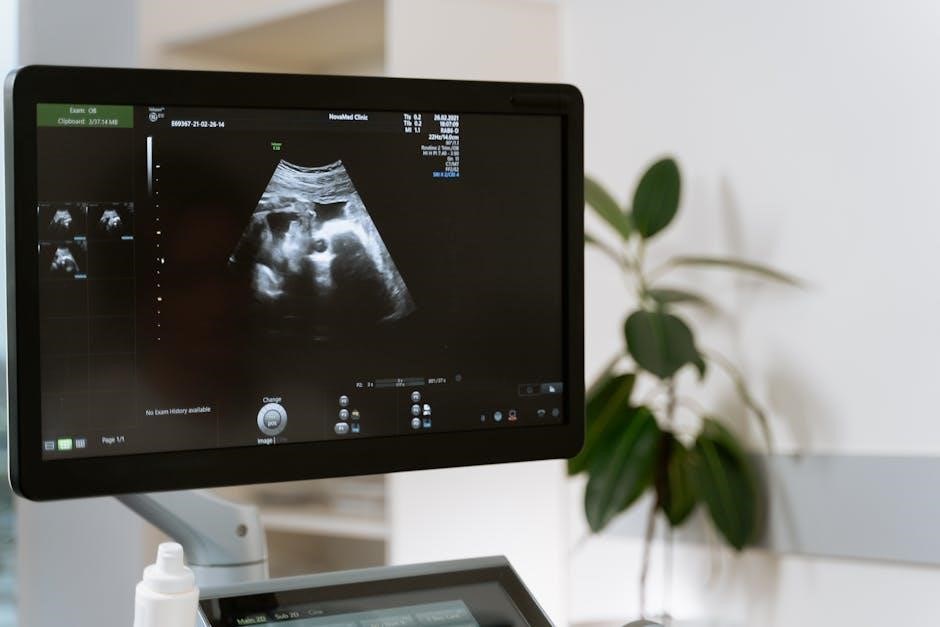
Coding for Micro Clip Placement
CPT 19083 includes micro clip placement during the initial breast biopsy; separate coding is only considered for complex cases or distinct procedures.
Micro Clip Placement Included in 19083
CPT code 19083‚ for the first lesion’s ultrasound-guided breast biopsy‚ inherently encompasses the placement of a breast localization device – commonly a micro clip. This means that if a micro clip is placed during the initial biopsy procedure‚ no separate code should be reported for the clip placement itself.
The bundled nature of this service simplifies billing when the clip is deployed concurrently with the biopsy. However‚ meticulous documentation is crucial to support this bundled coding‚ clearly demonstrating the clip placement occurred as an integral part of the 19083 procedure.
This avoids potential claim denials or audits.
Separate Coding Considerations for Complex Cases
While micro clip placement is typically included in CPT 19083‚ complex scenarios may warrant separate coding evaluation. If the localization device placement is significantly separate from the biopsy – requiring a distinct‚ substantial procedure – additional coding might be justifiable.
This could involve complex imaging guidance or a particularly challenging placement. Thorough documentation detailing the complexity is paramount. Furthermore‚ payer-specific guidelines should always be consulted‚ as interpretations can vary.
Always prioritize accurate representation of the services rendered to avoid compliance issues.
Limitations of Ultrasound Guidance
Ultrasound faces limitations with dense tissue and air/bone interference‚ potentially necessitating alternative modalities like MRI for optimal visualization during biopsy.
Sound Wave Propagation and Tissue Density
Ultrasound’s effectiveness hinges on sound wave propagation‚ which is significantly impacted by tissue density. Dense breast tissue‚ or the presence of air or bone‚ can impede these waves‚ creating acoustic shadows and reducing image clarity.
This limitation can make precise lesion targeting challenging during an ultrasound-guided breast biopsy (CPT 19083-19084). Consequently‚ smaller or deeply situated lesions might be difficult to visualize accurately.
When encountering such scenarios‚ clinicians may need to consider alternative imaging modalities‚ like MRI‚ to ensure accurate biopsy guidance and optimal patient outcomes.
Alternative Imaging Modalities (MRI)
MRI-guided breast biopsies (CPT 19085-19086) offer a valuable alternative when ultrasound (CPT 19083-19084) limitations arise due to tissue density or lesion characteristics. MRI provides superior soft tissue contrast‚ enabling clearer visualization of lesions obscured by dense breast tissue.
This enhanced imaging capability allows for more accurate needle placement during the biopsy procedure‚ particularly for smaller or non-palpable lesions. While MRI is more costly and time-consuming‚ it improves diagnostic accuracy in challenging cases.
Careful consideration of patient-specific factors and lesion characteristics guides the selection of the most appropriate imaging modality.

Coding Updates and Changes (as of 02/16/2026)
CPT code revisions for ultrasound-guided biopsies are ongoing; stay updated with the latest ACR Coding Companion and payer guidelines for accurate billing.
Recent CPT Code Revisions
As of February 16‚ 2026‚ there haven’t been sweeping changes to the core CPT codes (19083‚ 19084) for ultrasound-guided breast biopsies. However‚ ongoing scrutiny from payers necessitates diligent monitoring of local coverage determinations (LCDs).
Recent emphasis focuses on precise documentation supporting medical necessity and the accurate reporting of all services rendered‚ including clip placement and specimen imaging. Payers are increasingly auditing claims to ensure alignment between documentation and coding.
Furthermore‚ updates to coding guidelines often accompany changes in imaging technology and techniques‚ so continuous professional development is crucial for coders and billers.
Payer-Specific Coding Guidelines
Payer-specific guidelines significantly impact reimbursement for ultrasound-guided breast biopsies (CPT 19083‚ 19084). Medicare‚ for instance‚ may have specific requirements regarding documentation for switching imaging modalities.
Commercial insurers often have differing policies on bundling of services‚ particularly concerning micro-clip placement included within CPT 19083. Some may require separate coding in complex cases.
Always verify the specific coding policies of each payer before submitting claims. Failure to adhere to these guidelines can lead to denials or reduced payments‚ necessitating appeals and potentially impacting revenue cycle management.
Documentation Requirements for Coding Accuracy
Detailed procedure notes and comprehensive radiology reports are crucial for accurate CPT 19083/19084 coding‚ supporting medical necessity and services rendered.
Detailed Procedure Notes
Procedure notes must meticulously document the entire ultrasound-guided breast biopsy process. This includes clear descriptions of lesion location‚ size‚ and characteristics‚ as well as the number of lesions biopsied – essential for selecting CPT codes 19083 (first lesion) or 19084 (each additional lesion).
Specifically‚ note if a breast localization device (clip) was placed‚ as this is bundled into CPT 19083. Detail the imaging of the biopsy specimen. Any deviation from standard practice‚ or challenges encountered during the procedure‚ should be clearly stated. Accurate documentation justifies the billed services and supports medical necessity for appropriate reimbursement.
Radiology Reports and Findings
Radiology reports are crucial for substantiating ultrasound-guided breast biopsy coding‚ particularly CPT codes 19083 & 19084. Reports should detail the imaging findings that prompted the biopsy‚ including lesion characteristics and size.
Confirmation of successful specimen collection and clip placement (if applicable) is vital. The report must correlate with the procedure notes‚ supporting the medical necessity of the biopsy. Clear documentation of any modality switches‚ like adding CPT 77066 (tomosynthesis)‚ is essential. Thorough reports minimize claim denials and ensure accurate billing for the services rendered.

Resources for Breast Biopsy Coding
The ACR Coding Companion and CMS offer invaluable guidance for accurate CPT 19083/19084 coding‚ ensuring compliance and proper reimbursement.
American College of Radiology (ACR) Coding Companion
The American College of Radiology (ACR) Coding Companion is an indispensable resource for navigating the complexities of breast biopsy coding‚ particularly for procedures like ultrasound-guided biopsies utilizing CPT codes 19083 and 19084.
This comprehensive tool provides detailed coding guidance‚ including definitions‚ coding rules‚ and frequently updated information on CPT and ICD-10 codes. It clarifies nuances related to imaging guidance‚ lesion counts‚ and additional procedures like micro clip placement.
The ACR Coding Companion assists in ensuring accurate claim submissions‚ minimizing denials‚ and maximizing appropriate reimbursement for breast biopsy services. Regular updates reflect changes in coding guidelines and payer policies.
Centers for Medicare & Medicaid Services (CMS)
Centers for Medicare & Medicaid Services (CMS) provides crucial guidance on billing for ultrasound-guided breast biopsies‚ impacting CPT codes 19083 & 19084. CMS National Coverage Determinations (NCDs) and Local Coverage Determinations (LCDs) outline specific coverage criteria and coding requirements.
Staying current with CMS policies is vital‚ as they dictate acceptable documentation‚ coding edits‚ and reimbursement rates. CMS resources clarify rules regarding multiple lesion biopsies and the inclusion of imaging guidance.
Regularly reviewing CMS updates ensures compliance and accurate billing for these procedures‚ avoiding claim denials and maximizing appropriate payment.