
Bartender Study Guide: A Comprehensive Overview (Updated 02/16/2026)
Embark on a journey to master mixology! This guide provides essential knowledge, from foundational skills to advanced techniques,
and certification options,
preparing you for a thriving bartending career. Explore online courses and schools to gain a certificate and become a certified bartender.
I. Foundations of Bartending
Laying a solid groundwork is paramount for any aspiring bartender. Understanding the foundations of bartending isn’t merely about memorizing recipes; it’s about grasping the historical context and cultivating essential qualities. The art of bartending has evolved significantly over time, and appreciating this history provides valuable insight.
Successful bartenders possess a unique blend of skills – excellent communication, a strong memory, the ability to multitask under pressure, and a genuine passion for hospitality. These qualities are crucial for creating a positive guest experience. Equally important is a thorough understanding of the bar setup.
Familiarize yourself with the layout, the location of tools and glassware, and the organization of spirits and mixers. This knowledge streamlines service and ensures efficiency. Every bartender must first understand these basics, as knowledge truly makes bartending easier and job acquisition smoother. Begin with an online course to build this base!
A. The History of Bartending
The evolution of bartending is a fascinating journey, stretching back to ancient civilizations where mixed beverages served ritualistic and medicinal purposes. However, the modern profession truly began to take shape in the 19th century, during the Gold Rush era in America. Saloons emerged as social hubs, and bartenders became skilled showmen, crafting elaborate cocktails.
The Prohibition era (1920-1933) ironically spurred innovation, as bartenders relocated to Europe and refined their craft, later returning with new techniques and recipes. Post-Prohibition, cocktail culture experienced a resurgence, with classic cocktails regaining popularity.
Today, we’re witnessing a “golden age” of bartending, characterized by a renewed focus on quality ingredients, artisanal spirits, and creative mixology. Understanding this historical trajectory provides context for current trends and a deeper appreciation for the art form. It’s a foundation for any aspiring bartender seeking a certificate.
B. Essential Bartender Qualities
Beyond mixing drinks, successful bartenders possess a unique blend of skills and attributes. Exceptional customer service is paramount – creating a welcoming atmosphere and building rapport with patrons. A strong memory is crucial for remembering complex drink recipes and customer preferences.
Multitasking is essential, as bartenders often manage multiple orders simultaneously while maintaining cleanliness and organization. Physical stamina is required for long shifts spent standing and moving. Integrity and responsibility are non-negotiable, particularly when handling cash and alcohol.
Furthermore, a passion for the craft, a willingness to learn, and a positive attitude contribute significantly to success. Completing an online bartender course can instill these qualities, leading to certification and a fulfilling career.
C. Understanding the Bar Setup
A well-organized bar is the cornerstone of efficient service. The “workstation” typically comprises several key zones: the dispensing area (where spirits and mixers are stored), the mixing station (for crafting cocktails), the service area (for presenting drinks to customers), and the cash register point.
Familiarity with the back bar – the shelving unit displaying spirits – is vital. Knowing the location of each bottle streamlines drink preparation. Proper glassware storage, categorized by type, is also essential. Maintaining cleanliness and stock levels are ongoing responsibilities.
Online bartending courses often cover bar setup principles, preparing students for real-world scenarios. Mastering this layout, alongside obtaining a bartender certificate, ensures smooth operations and a professional appearance.
II. Spirits & Liqueurs – The Core Knowledge
A successful bartender possesses in-depth spirit knowledge. Understanding the nuances of Whiskey – Scotch, Bourbon, and Rye – is crucial, recognizing their distinct production methods and flavor profiles. Vodka, known for its neutrality, requires knowledge of production variations impacting taste.
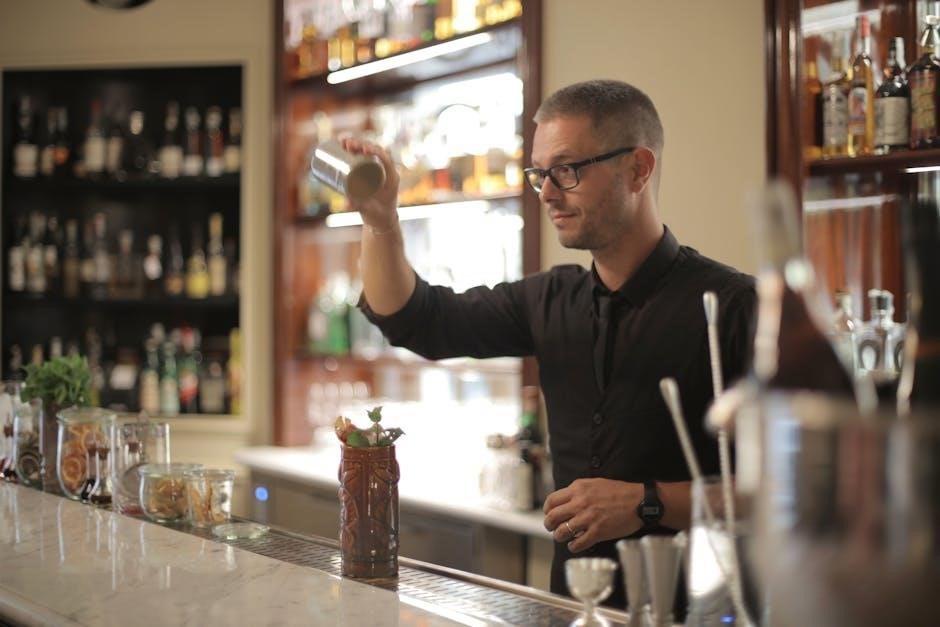
Gin’s botanical complexity demands familiarity with different styles. Rum, ranging from light to dark, showcases diverse origins and aging processes. Tequila and Mezcal, derived from agave, necessitate understanding their production differences.
Online bartender training emphasizes these distinctions. Liqueurs, with their diverse flavors, offer versatility in cocktail creation. Mastering these spirits and liqueurs is fundamental to becoming a professional, and is often a core component of a bartender certificate program.
A. Whiskey Varieties (Scotch, Bourbon, Rye)
Whiskey represents a cornerstone of any well-stocked bar. Scotch, originating from Scotland, boasts diverse regional styles – Highland, Lowland, Speyside, and Islay – each with unique characteristics influenced by peat, water, and distillation methods. Bourbon, an American whiskey, requires a majority corn mash and aging in new, charred oak barrels, imparting vanilla and caramel notes.
Rye whiskey, also American, utilizes rye as the dominant grain, resulting in a spicier, drier profile. Understanding grain bills, aging processes, and regional variations is vital. Bartender school curricula heavily emphasize these distinctions.
Knowing the legal definitions and common brands within each category elevates service. A certified bartender confidently guides guests through whiskey selections, enhancing their experience.
B. Vodka: Production & Profiles
Vodka, renowned for its neutrality, presents a surprisingly complex landscape. Traditionally crafted from grains like wheat, rye, or barley, modern production extends to potatoes and even grapes. Distillation and filtration processes significantly impact the final product, aiming for a clean, crisp spirit.
While often perceived as flavorless, vodka exhibits subtle nuances. Grain-based vodkas tend towards a smoother profile, while potato vodkas offer an earthier character. Understanding these distinctions is crucial for cocktail creation. Online bartender courses often detail these subtleties.
A skilled bartender recognizes how vodka’s neutrality serves as a blank canvas, allowing other ingredients to shine. Mastering vodka-based cocktails is fundamental to professional proficiency and certification.
C. Gin: Botanical Basics & Styles
Gin’s defining characteristic is its flavoring with botanicals, most notably juniper berries. However, the spectrum of botanicals extends far beyond, encompassing coriander, citrus peels, angelica root, and countless others. These additions create diverse flavor profiles, distinguishing various gin styles.

London Dry Gin, a benchmark style, demands distillation to a high proof and prohibits the addition of flavors post-distillation. Old Tom Gin offers a slightly sweeter profile, while Plymouth Gin boasts a softer, earthier character. New Western or Contemporary gins showcase innovative botanical combinations.
A comprehensive bartender education, like those offered in online bartender training programs, emphasizes recognizing these nuances. Understanding gin styles is vital for crafting balanced cocktails and achieving certification.
D. Rum: From Light to Dark
Rum, a spirit born from sugarcane byproducts, presents a remarkable range of styles, categorized broadly by color and aging. Light rums, often filtered, are typically used in cocktails like Mojitos and Daiquiris, offering a clean base. Golden rums, aged in oak barrels, develop richer flavors and are versatile in mixed drinks.
Dark rums, aged longer, boast intense molasses and caramel notes, ideal for sipping or adding depth to cocktails. Spiced rums incorporate flavorings like vanilla and cinnamon, while agricole rums, made from fresh sugarcane juice, offer a grassy, vegetal character.
A solid bartender foundation, achievable through an online Bartender Certificate Course, includes mastering rum’s diverse profiles. Knowing these distinctions is crucial for both crafting cocktails and attaining professional certification.
E. Tequila & Mezcal: Agave Explained

Tequila and Mezcal, both Mexican spirits, originate from the agave plant, but differ significantly in production. Tequila, specifically from the Blue Weber agave, must be produced in designated regions of Mexico. It’s categorized into Blanco (unaged), Reposado (aged 2-12 months), and Añejo (aged over a year), each offering unique flavor profiles.
Mezcal, however, can be made from over 30 agave varieties and often exhibits a smoky flavor due to traditional earth-pit roasting. Understanding these nuances is vital for any aspiring bartender.
An online training program, like those offered by ABC Bartending School Online, will cover agave types and production methods. Mastering these spirits is key to achieving certification and providing informed service.
F. Liqueurs: Flavors & Applications
Liqueurs are sweetened spirits with added flavors, ranging from fruits and herbs to nuts and spices. They’re incredibly versatile, functioning as cocktail ingredients, after-dinner digestifs, or enjoyed neat. Common examples include orange liqueurs (Cointreau, Grand Marnier), coffee liqueurs (Kahlúa), and crème de menthe.
A comprehensive bartender education, such as an online course from Alchemy Bartending School Ltd, will detail liqueur production and flavor profiles. Knowing how liqueurs interact with other spirits is crucial for crafting balanced cocktails.
Understanding their applications – whether enhancing a classic or creating something new – is essential for a professional. Achieving certification demonstrates this knowledge and elevates your skills behind the bar.
III. Cocktail Families & Techniques
Mastering cocktail families is key to bartending success. Understanding the core formulas – Sours (spirit, citrus, sweetener), Old Fashioneds (spirit, sugar, bitters), Highballs (spirit & mixer) – provides a foundation for creativity. Martinis and Manhattans represent classic stirred cocktails, demanding precision.
A solid bartender training program, like those offered online by ABC Bartending School, emphasizes these techniques. Knowing when to shake (for juice-based drinks) versus stir (for spirit-forward drinks) impacts texture and clarity.
Developing proficiency in these techniques, and gaining a certificate, demonstrates a commitment to quality and elevates your professional standing. Every bartender benefits from this foundational knowledge.
A. Sours: The Classic Formula
The Sour is arguably the most fundamental cocktail family. Its elegant simplicity – spirit, citrus juice, and a sweetener – provides endless variation; The Whiskey Sour, Daiquiri, and Margarita all adhere to this core structure, showcasing the versatility of the formula.
A quality online bartender course, such as those offered by Alchemy Bartending School, will dissect the Sour, explaining the importance of balance. Mastering the ratio between sweet and sour is crucial for a harmonious drink.
Understanding how different spirits interact with citrus is also key. Achieving a certificate demonstrates proficiency in this essential technique, making you a more confident and capable bartender. This foundational knowledge is invaluable.

B. Old Fashioned Family
The Old Fashioned represents a cornerstone of classic cocktailing. Traditionally built with a spirit (often whiskey), sugar, bitters, and a citrus twist, it emphasizes spirit-forward flavors. Variations abound, but the core principle remains: showcasing the quality of the base spirit.
A comprehensive bartender education, like those found in online training programs, will highlight the importance of muddling, dilution, and proper ice usage. Learning to build an Old Fashioned correctly demonstrates a fundamental understanding of cocktail construction.
Gaining a certificate through ABC Bartending School Online, or similar accredited institutions, validates your ability to create this iconic drink consistently. Mastering the Old Fashioned is a significant step towards becoming a skilled mixologist, and a testament to your dedication.
C. Highballs & Collins
Highballs and Collins drinks are renowned for their simplicity and refreshing qualities. A highball generally consists of a spirit and a carbonated mixer, while a Collins adds citrus juice – typically lemon – to the equation. These are essential staples for any bartender to master.
Online bartender courses emphasize the importance of proper dilution and effervescence when crafting these drinks. Understanding the interplay between spirit, mixer, and ice is crucial for achieving balance. The Essentials of Bartending Online Course covers these techniques in detail.
Successfully executing a Highball or Collins demonstrates a foundational skill, often assessed during bartender certification programs. Whether learning through Alchemy Bartending School or another provider, proficiency in these classics is non-negotiable for a professional.
D. Martinis & Manhattans
Martinis and Manhattans represent the pinnacle of classic cocktail craftsmanship. These spirit-forward drinks demand precision and a deep understanding of balance, making them key components of any comprehensive bartender education. Mastering these recipes is vital for aspiring mixologists.
Online training programs, like those offered by ABC Bartending School Online, dedicate significant time to the nuances of Martini and Manhattan preparation. This includes proper stirring techniques, vermouth selection, and garnish choices. A certificate in bartending often requires demonstrating proficiency.
The art of adjusting ratios to suit individual preferences is also emphasized. From dry to wet Martinis, and sweet to perfect Manhattans, a skilled bartender can tailor these drinks to perfection. These skills are foundational for a successful career, as highlighted in various online bartender courses.
E. Shaking vs. Stirring: When to Use Which
Understanding the difference between shaking and stirring is fundamental to bartending. It’s not merely about technique, but about texture and temperature control, crucial elements emphasized in any reputable bartender school or online course. Proper execution significantly impacts the final cocktail.
Generally, cocktails containing juice, dairy, or egg whites are shaken to achieve proper emulsification and chilling. Shaking introduces aeration, creating a lighter, more textured drink. Conversely, spirit-forward cocktails like Manhattans and Martinis are stirred to maintain clarity and a silky mouthfeel.
Online training programs, such as those from Alchemy Bartending School Ltd, delve into the science behind these methods. A certificate often requires demonstrating mastery of both. Learning when to employ each technique is essential for any aspiring professional bartender, elevating their craft and customer satisfaction.
IV. Bartending Tools & Glassware
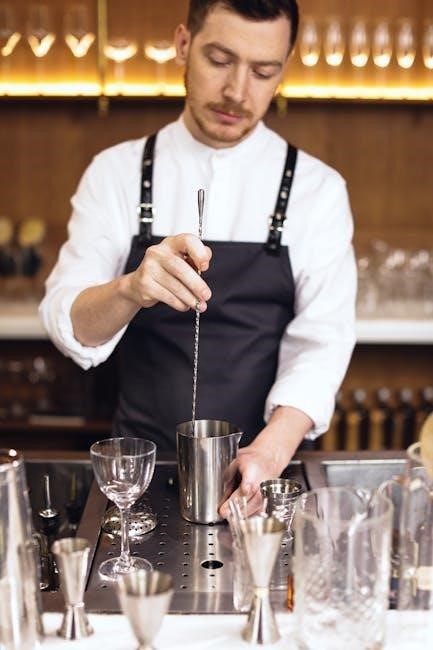
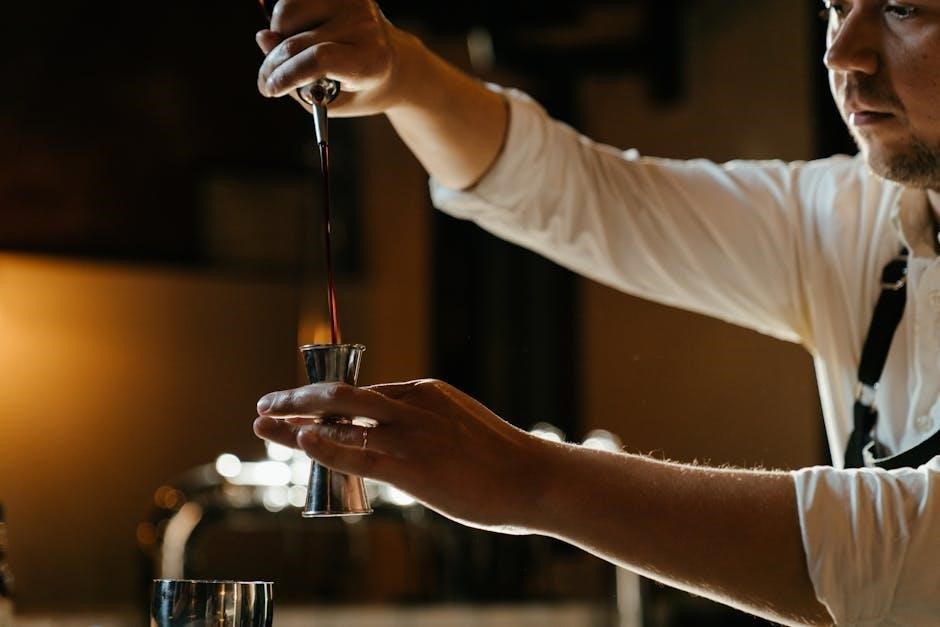
Mastering bartending necessitates familiarity with essential tools and glassware. A foundational aspect of any online bartender training program, understanding these elements is key to efficiency and precision. Core tools include jiggers for accurate measurement, various shakers (Boston, Cobbler), and strainers (Hawthorne, Julep) for seamless pours.
Glassware selection impacts the drinking experience. Highballs, Collins glasses, coupes, and rocks glasses each serve specific purposes, influencing aroma, temperature, and presentation. A comprehensive bartender certificate course will cover proper glass pairing.
Online resources and schools like ABC Bartending School Online emphasize tool maintenance and glassware care. Proficiency with these tools, coupled with knowledge of glassware, transforms a bartender from novice to professional, enhancing service and cocktail quality.
A. Essential Bar Tools (Jiggers, Shakers, Strainers)
A skilled bartender’s arsenal begins with mastering essential tools. Jiggers are paramount for precise ingredient measurement, crucial for consistent cocktail quality – a key lesson in any reputable online bartender course. Shakers, including the Boston shaker (two-piece) and Cobbler shaker (three-piece with built-in strainer), are vital for chilling and diluting drinks.
Strainers refine the pour. Hawthorne strainers, with their spring coil, catch ice and muddled ingredients, while Julep strainers are ideal for stirred drinks. Proper technique with these tools, emphasized in programs like those offered by Alchemy Bartending School, elevates efficiency.
Bartender training, whether online or in-person, stresses tool maintenance. Understanding each tool’s function and proper care is fundamental to professional service and achieving a certificate.
B. Understanding Glassware Shapes & Uses
Glassware isn’t merely aesthetic; it profoundly impacts the drinking experience. Mastering glassware is a core component of any comprehensive bartender education, including those found in online courses. Highball glasses suit tall, effervescent drinks, while Collins glasses, slightly taller and narrower, are perfect for Tom Collins and similar cocktails.
Rocks glasses, short and wide, accommodate spirit-forward drinks served on the rocks. Martini glasses, with their iconic conical shape, showcase classic cocktails. Coupe glasses offer an elegant alternative, minimizing dilution. Proper selection, taught in programs like ABC Bartending School Online, enhances aroma and presentation.
A certified bartender understands that glassware choice isn’t arbitrary; it’s integral to delivering a polished, professional service and achieving a certificate.
V. Bartending Certification & Education
Formal education significantly enhances bartending prospects. Numerous options exist, ranging from comprehensive online courses to accredited schools like Alchemy Bartending School Ltd. These programs, such as those offered by Bartending College Online since 1980, equip aspiring bartenders with essential skills and knowledge.
Online Training provides flexibility, while in-person schools offer hands-on experience. A certificate demonstrates commitment and competency to potential employers. Courses cover cocktail recipes, spirit knowledge, and responsible alcohol service. The Essentials of Bartending Online Course, with 34 lessons, is a popular choice.
Gaining a Level 2 Certificate in Professional Bartending Skills is a major step. Ultimately, a recognized qualification, like a Bartender certificate, boosts credibility and career advancement.
A. Online Bartending Courses: A Review
Online bartending courses offer convenience and affordability. Platforms like ABC Bartending School Online provide comprehensive training, teaching popular cocktails and distilled spirits. These courses aim to transform students into professional bartenders, mastering mixology from the comfort of their homes.
The Essentials of Bartending Online Course, led by Gavin Wrigley, is a well-regarded option, offering 34 detailed lessons. Many courses emphasize foundational knowledge, crucial for acquiring bartending jobs. They often cover responsible alcohol service and legal requirements.
E-Learning provides a flexible schedule, ideal for those with existing commitments. Upon completion, students typically receive a certificate, validating their newly acquired skills. Consider exploring all available online options to find the best fit for your learning style and career goals.
B. Accredited Bartending Schools (Online & In-Person)
Choosing an accredited bartending school is crucial for career advancement. Bartending College Online, established since 1980, boasts a nationwide reputation for quality online bartender training. Alchemy Bartending School Ltd, based in Cyprus, stands as a top educational institution for bartenders, baristas, and managers.
Accreditation ensures the curriculum meets industry standards, enhancing your credibility with potential employers. Schools offer varying levels of certification, including Level 2 Certificates in Professional Bartending Skills and Level 4 National Diplomas in Bar Management.
In-person schools provide hands-on experience, while online programs offer flexibility. Research thoroughly, considering factors like course content, instructor qualifications, and career placement assistance. A reputable school will equip you with the skills and certificate needed to succeed.
C. Obtaining a Bartender Certificate
Securing a bartender certificate validates your skills and knowledge, significantly boosting your employability. ABC Bartending School Online welcomes aspiring mixologists, offering comprehensive training to master the art of bartending. The online Bartender Certificate Course is developed to meet high academic standards, allowing graduates to display their achievement with pride.
Many courses, like those offered by leading schools, cover essential topics – popular cocktails, distilled spirits, and professional bartending techniques. Upon completion, you’ll receive a certificate demonstrating your commitment to the craft.
Consider the program’s recognition within the industry. A well-respected certificate can open doors to better job opportunities and higher earning potential. It’s a tangible representation of your dedication and expertise behind the bar.
VI. Advanced Bartending Skills

Elevating your bartending prowess requires mastering techniques beyond the basics. Free pouring, a hallmark of skilled bartenders, demands practice and precision to consistently deliver accurate pours, minimizing waste and maximizing efficiency. Garnishing and presentation transform drinks into visually appealing creations, enhancing the overall customer experience.
Speed and efficiency are crucial during peak hours. Streamlining your workflow, memorizing recipes, and anticipating customer needs are key to providing prompt and attentive service. Award-winning bar owner Charlie Ainsbury offers online resources to refine these skills.
Continuous learning and experimentation are vital for staying ahead in the dynamic world of mixology. Embrace new trends, explore innovative flavor combinations, and refine your craft to become a true bar professional.
A. Free Pouring Techniques
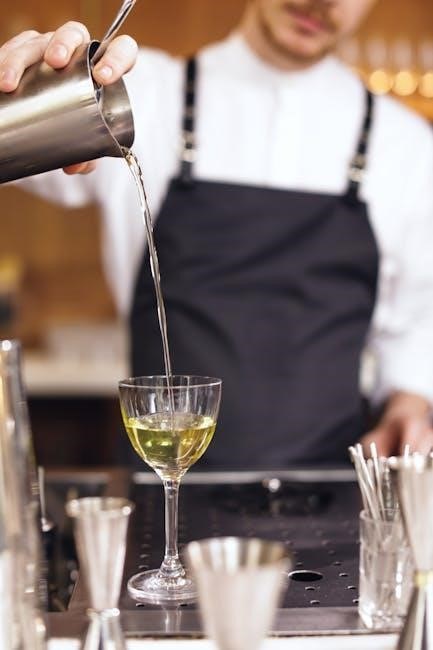
Free pouring is a cornerstone of advanced bartending, demonstrating skill and efficiency. It involves dispensing spirits directly from the bottle without a jigger, relying on practiced hand-eye coordination and a consistent pouring motion. Mastering this technique requires dedicated practice, starting with water to develop muscle memory.
Consistency is paramount. Focus on maintaining a steady hand, a controlled pour rate, and a consistent bottle angle. Visual cues, such as counting seconds or observing the liquid level, can aid accuracy.
Understanding bottle variations is crucial. Different bottle shapes and spout sizes require adjustments to your technique. Regular practice and feedback are essential for achieving precise and reliable free pours, ultimately enhancing speed and minimizing waste behind the bar.
B. Garnishing & Presentation
Garnishing elevates a cocktail from a drink to an experience. It’s not merely decorative; it enhances aroma, flavor, and visual appeal. Classic garnishes include citrus twists, fruit wedges, olives, and cherries, but creativity is encouraged.
Presentation matters. Consider the glass shape, the drink’s color, and the overall aesthetic. A well-garnished cocktail demonstrates attention to detail and professionalism. Proper technique is vital – learn to create elegant twists, precise cuts, and attractive arrangements.
Freshness is key. Use high-quality, vibrant ingredients. Garnishes should complement the cocktail’s flavors, not overpower them. Mastering garnishing transforms a simple drink into a memorable and visually stunning creation, showcasing your bartending artistry.
C. Speed & Efficiency Behind the Bar
Mastering speed and efficiency is crucial for a successful bartending career. A busy bar demands quick service without compromising quality. Prioritize workflow: organize your station, pre-prep ingredients, and memorize common recipes.
Minimize wasted motion. Practice efficient pouring techniques, streamline your steps, and anticipate customer needs. Batching ingredients for popular drinks can significantly reduce preparation time. Multitasking – safely managing multiple orders simultaneously – is a valuable skill.
Staying calm under pressure is essential. A confident demeanor and organized approach will help you navigate peak hours effectively. Continuous practice and a focus on optimizing your movements will transform you into a swift and reliable bartender.